Plant of the Month

This is our Plant of the Month section, where we introduce you to a new plant each month.

August – Milkweed
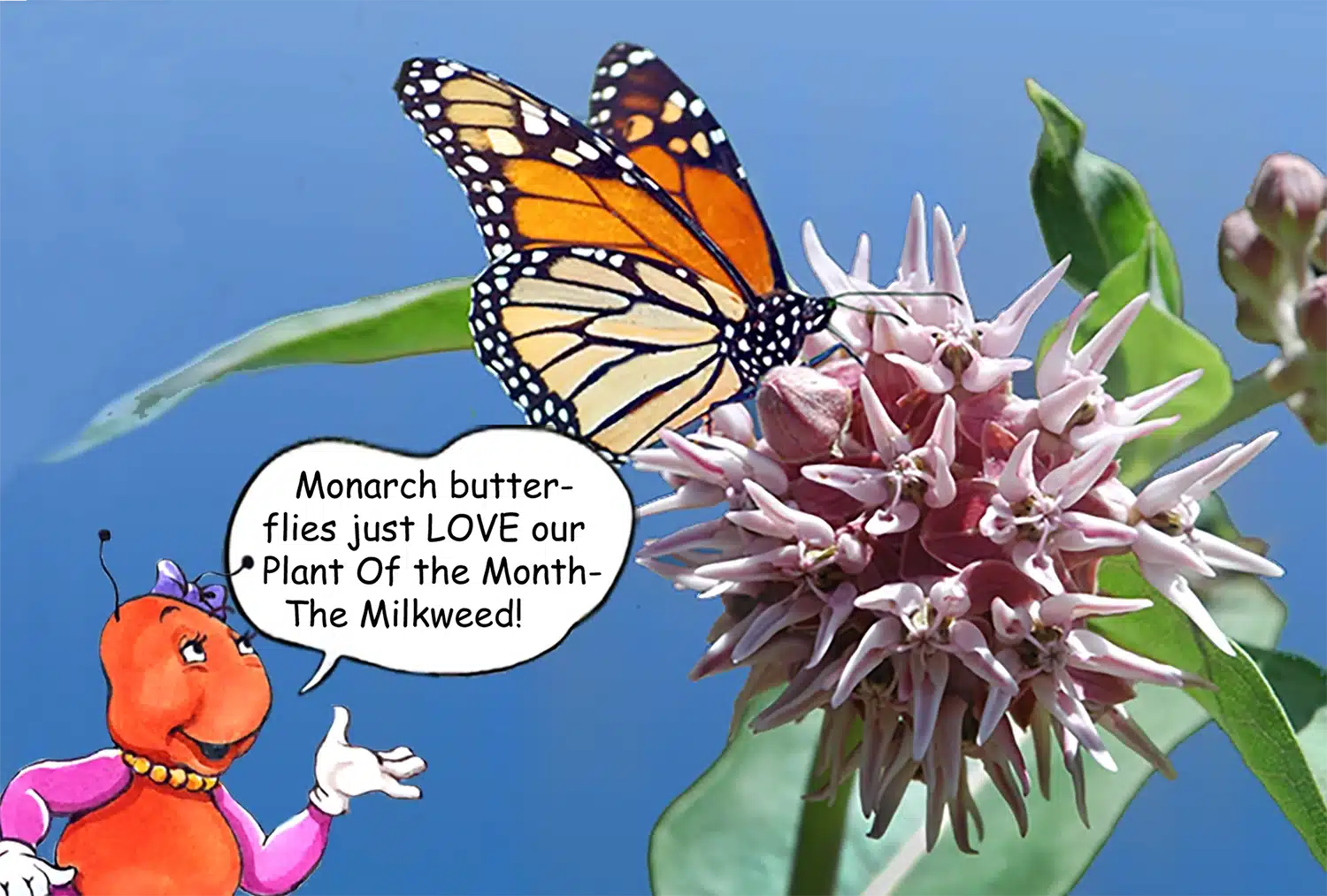
Milkweed grows all over The United States except for the dry areas of the prairies and deserts. There are several different types. Our Plant of the Month is the called “Common Milkweed.” It’s considered a “weed” because it spreads and multiplies with ease.
Mostly it’s known as food for the beautiful Monarch butterfly and their little caterpillars, but it has a lot more to offer.
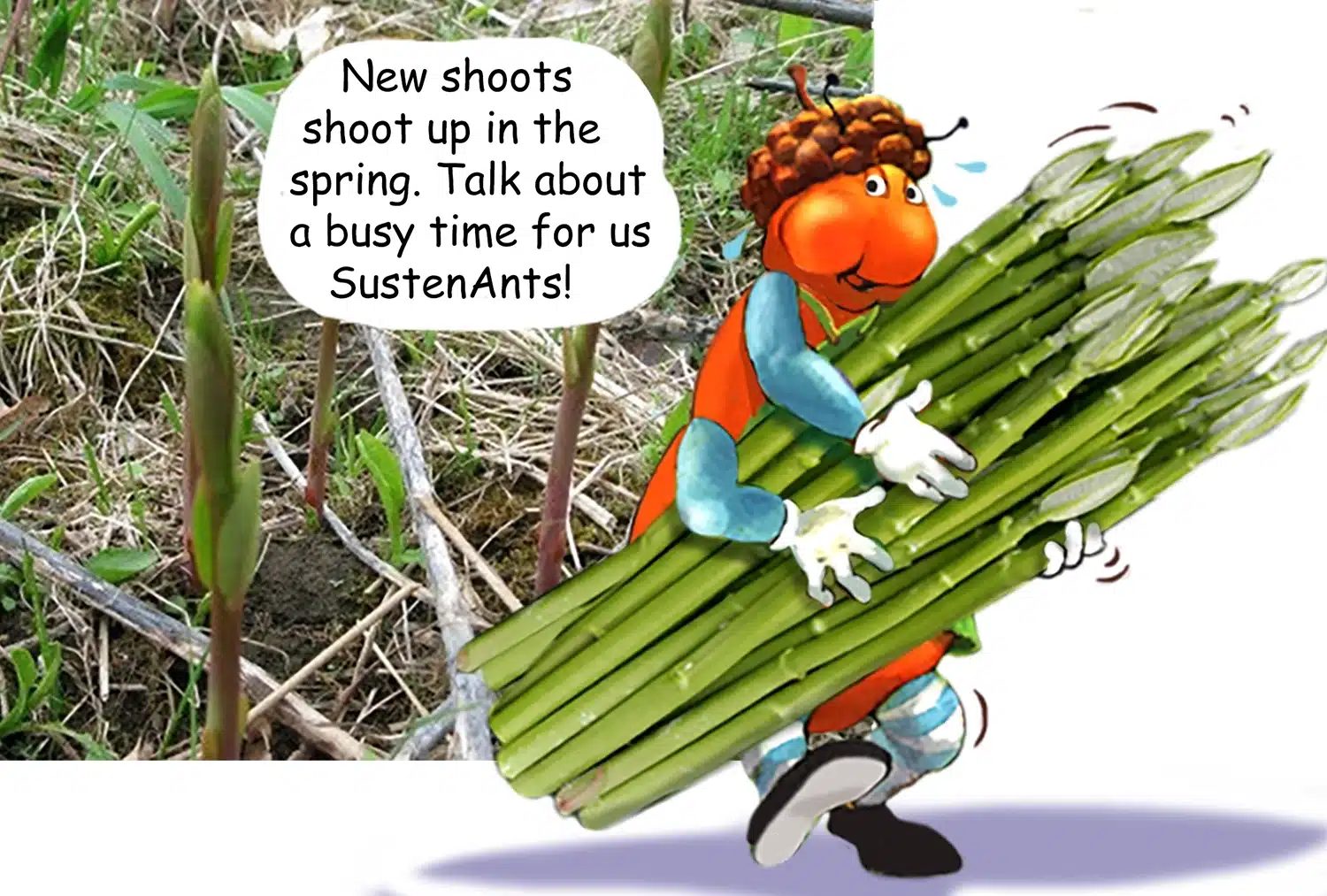
In late spring the new shoots push up among last season’s dried stalks.
These shoots are edible. But be careful! There is a look-alike plant called Dogbane that is poisonous. The Dogbane shoots are thinner, and both the stem and leaves are smooth. They’re reddish-purple on the upper part of the stem. The stem and the new leaves of the Common Milkweed shoots are a tiny bit fuzzy.
Remember – NEVER pop anything in your mouth that grows wild outdoors, unless you are totally sure or you’re with an adult who knows which plants you can eat.
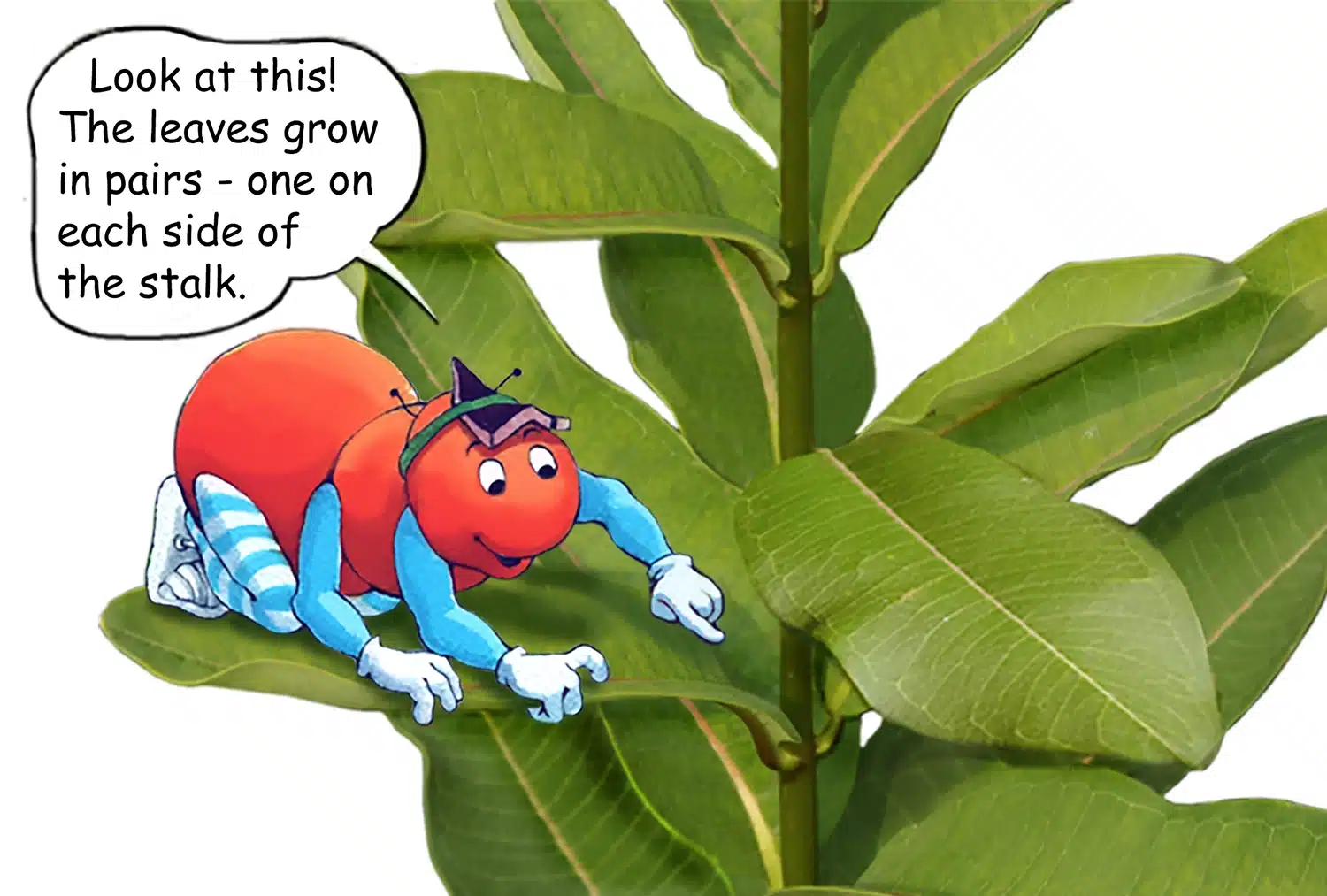
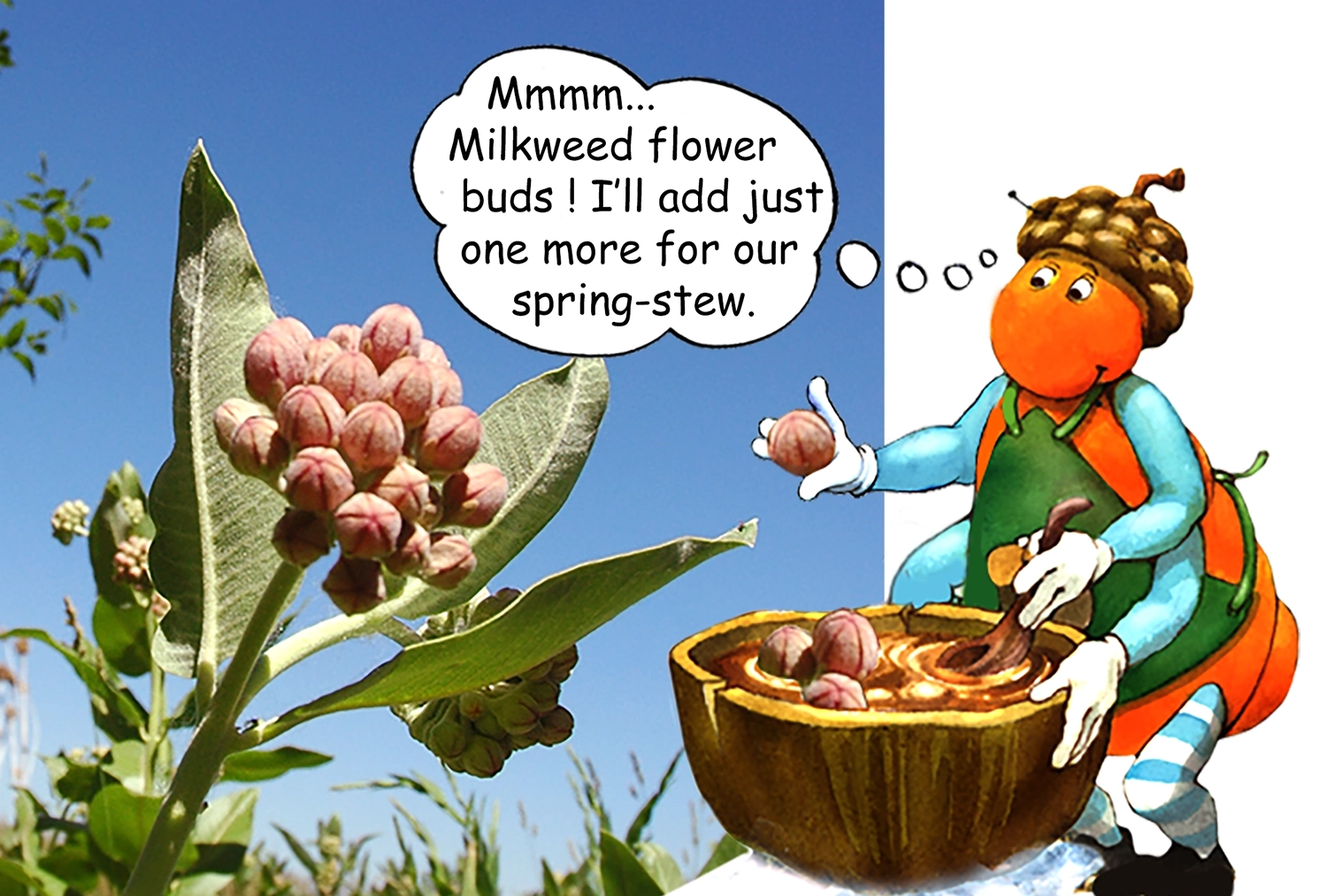
The Milkweed leaves are large and oval. They have even edges and are smooth on top while the underside can be slightly fuzzy. They grow two by two one on each side of the stalk. The next set of leaves point in the other direction, and so on. Look at the picture. If you tear a bit of a leaf, you can see a white liquid inside. The whole plant is full of this sticky, milky stuff that comes out if any part is cut. That’s how it got its name ‘Milkweed’.
The flower-buds grow in clusters, looking like small heads of broccoli. They first appear in early summer. These can be eaten, but in small amounts. They taste like the young shoots and are great in a salad or stir-fries. Just make sure they’re washed and free from any little butterfly-eggs or caterpillars. If you find any of those, put them together with some milkweed leaves in a glass jar that has a lid with holes pierced in it. Then you can watch the miracle of metamorphosis – the change from caterpillar to butterfly.
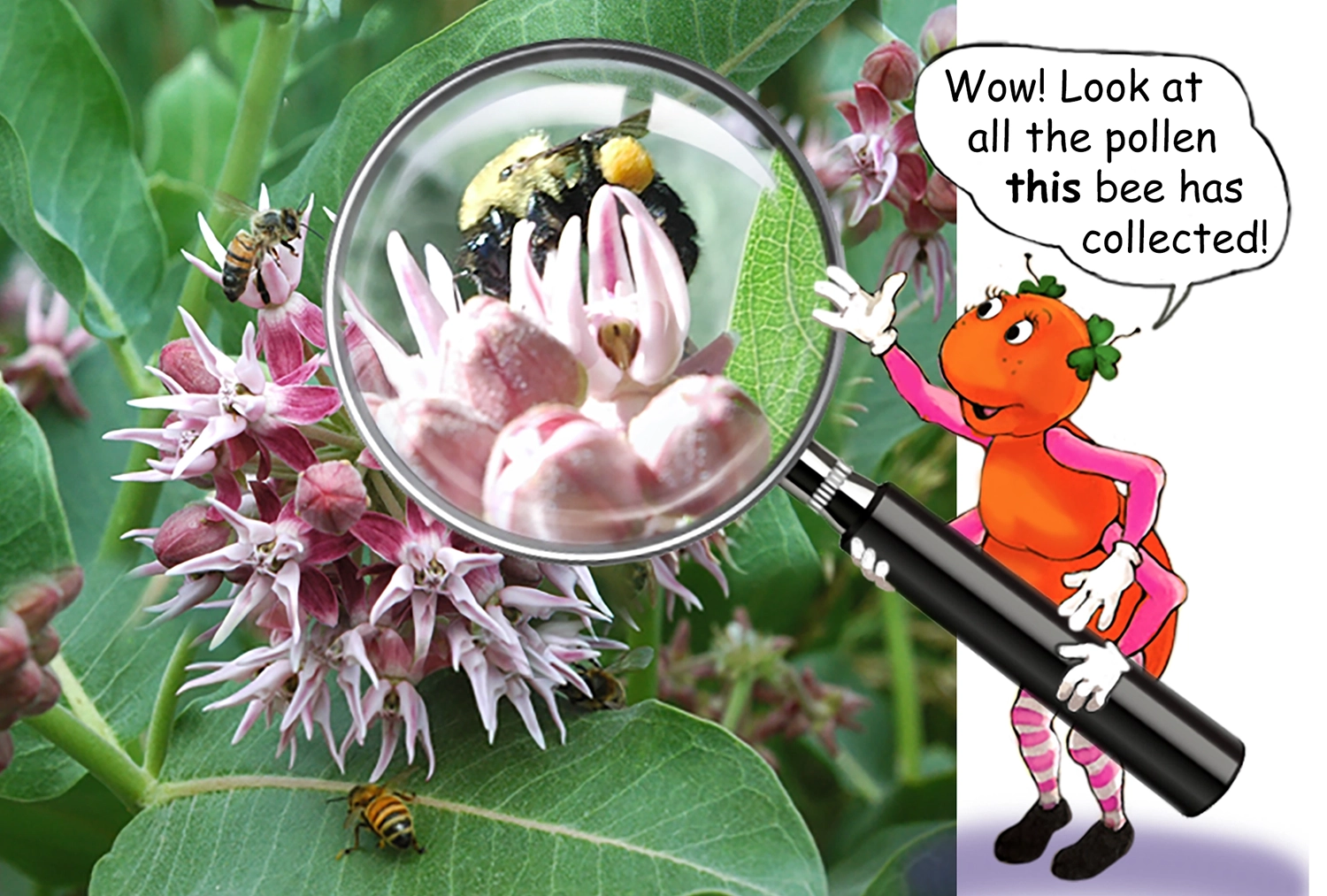
Once the flowers bloom, the color of the petals turns pink to reddish purple. These flowers have a strong, sweet smell. Besides being the Monarch butterfly’s favorites, they are also popular with bees and hummingbirds.
Only one to five flowers of the whole bunch, become fertilized and produce seeds. The Common Milkweed plant can grow to be three to six feet tall. It has only one thick stalk that branches out at the top with stems and several flower heads. The main stalk is tough and strong. Twine or string can be made from it.
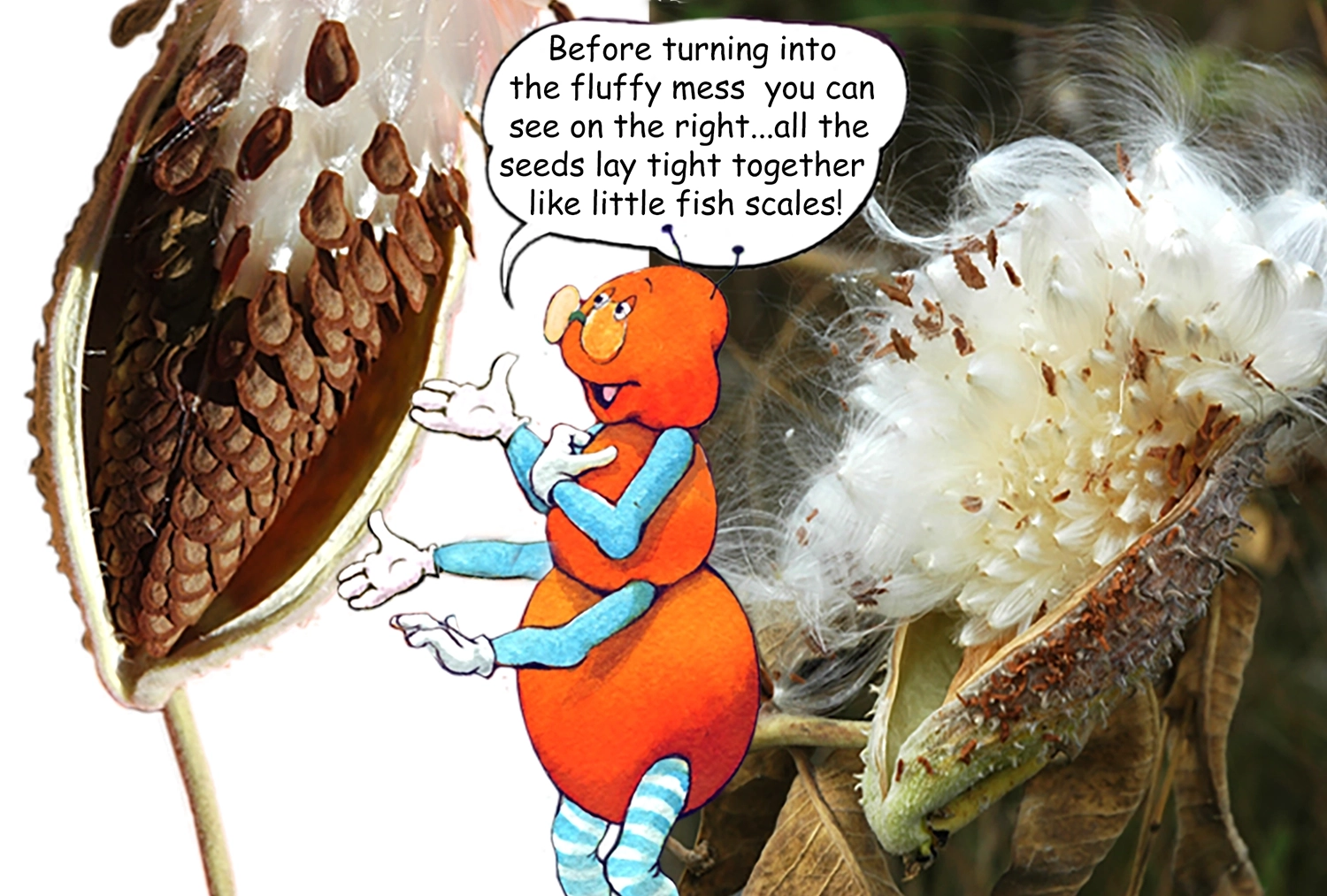
In the late summer and early fall, when the flower heads have dried up, new seedpods appear in their place. They start out as soft, green, bumpy things, which grow to be about four, five inches long.
As the seeds get ready inside, the pods turn light brown and hard. Check out the picture to see how the seeds are arranged inside.
When the seeds are mature, the pod splits lengthwise and lets out a whole mess of fluff. Each seed has its own little tuft of fine hair.
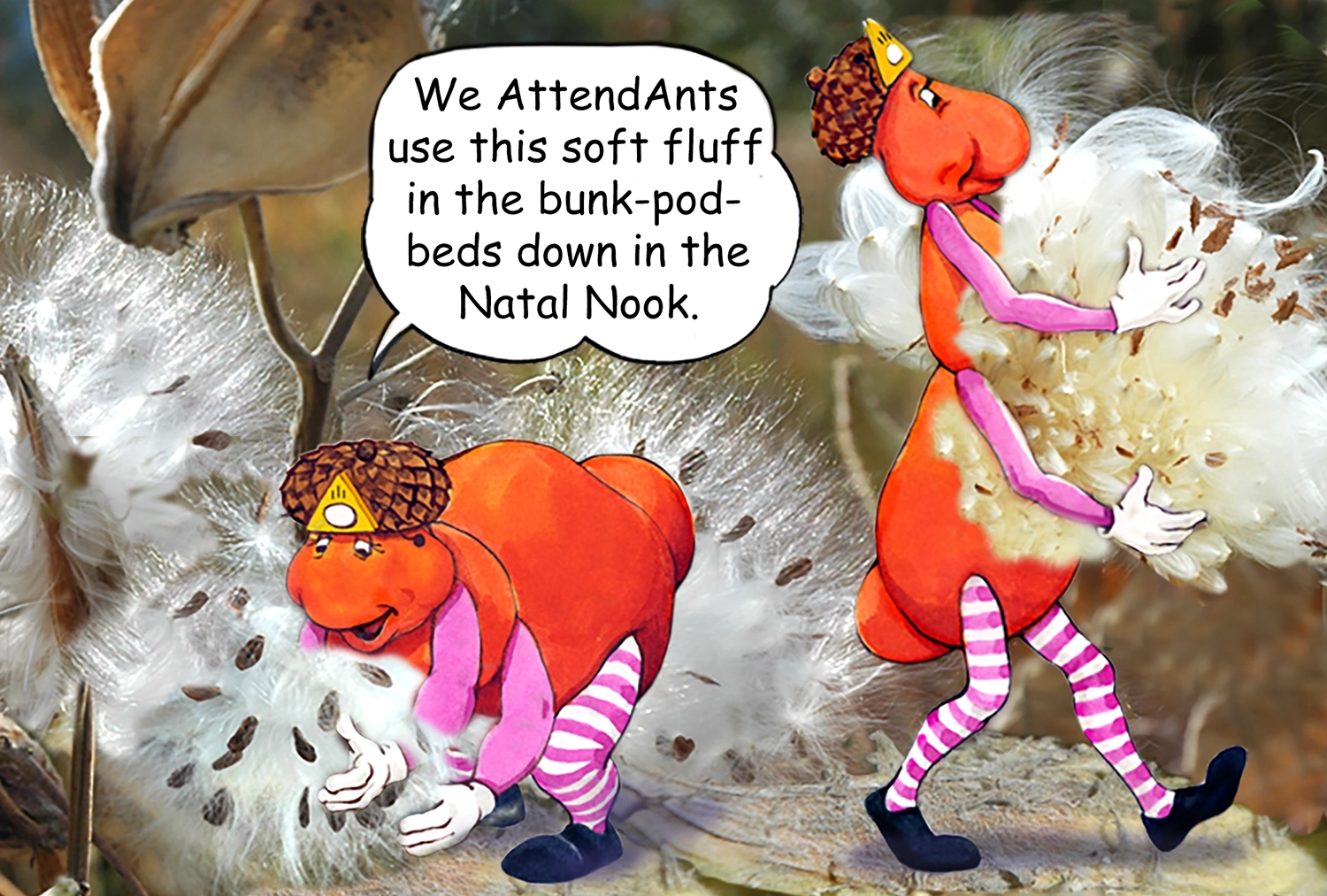
The AttendAnts are on the job, collecting lots of this fuzzy, white down. They use it for bedding and stuff it in pouches to make soft pillows for all of us.
In the past, even people used this fluff for filling life vests and mattresses.
We gallavants love to blow it high up in the air and watch how the wind carries it to new, faraway places. Each seed carries the potential for a whole new Milkweed plant, it just needs to land in some soil that has the right conditions.
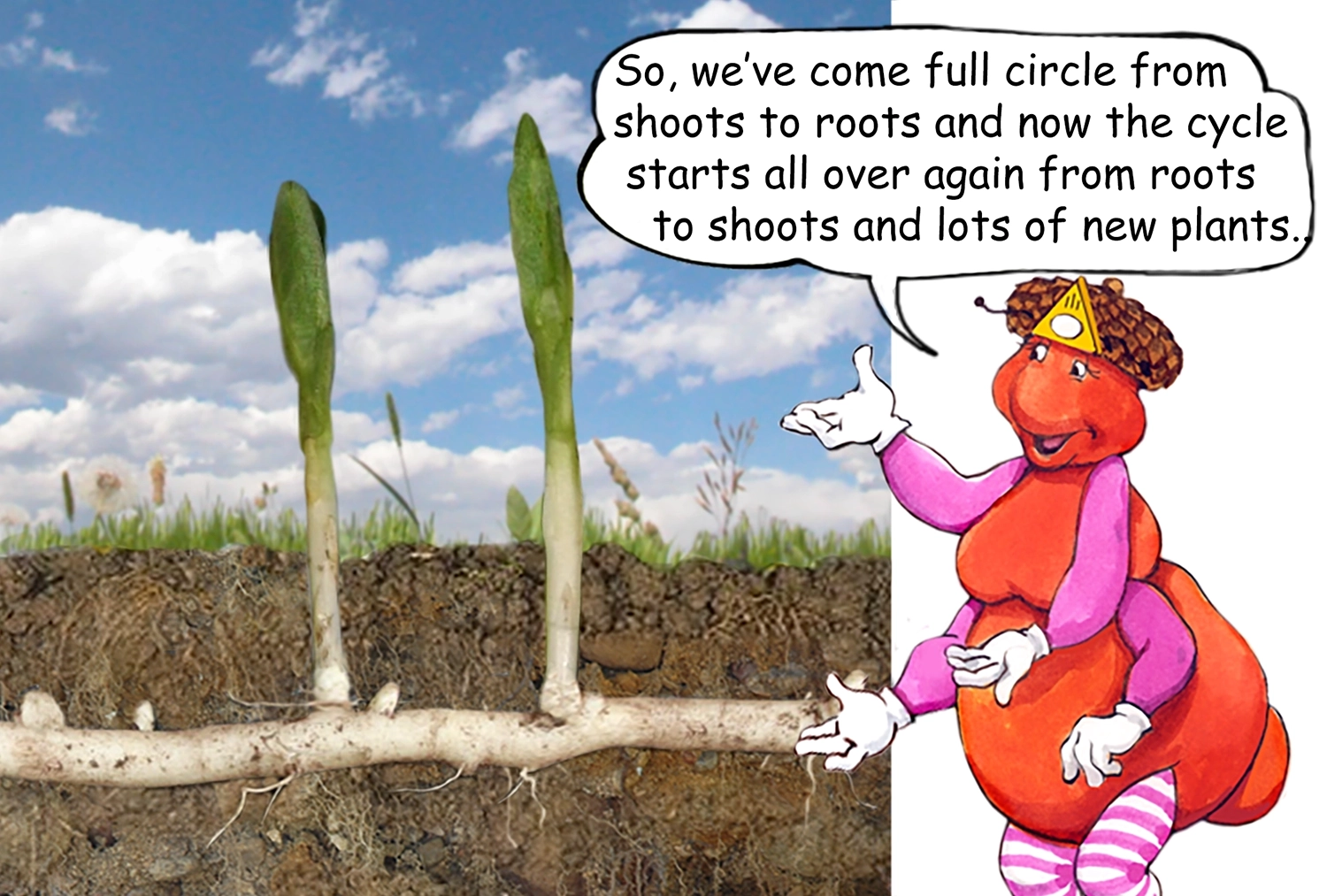
The roots of The Common Milkweed are long and sturdy. They grow sideways just deep enough for a plough to miss them. Smart plant, eh? New shoots pop up here and there along the main roots. There can be a whole new Milkweed-colony from just one happy plant and food for lots of beautiful Monarch butterflies.

Join our Newsletter:

Hey kids and parents! Don’t miss out on the fun—join our Gallavants mailing list today! Be the first to know when we reveal the next Plant of the Month with more exciting facts, colorful adventures, and nature surprises. It’s a fun way to learn together and stay connected to the amazing world of plants. Sign up now and let the discoveries bloom!