
Plant of the Month
This is our Plant of the Month section, where we introduce you to a new plant each month.

December – Spruce
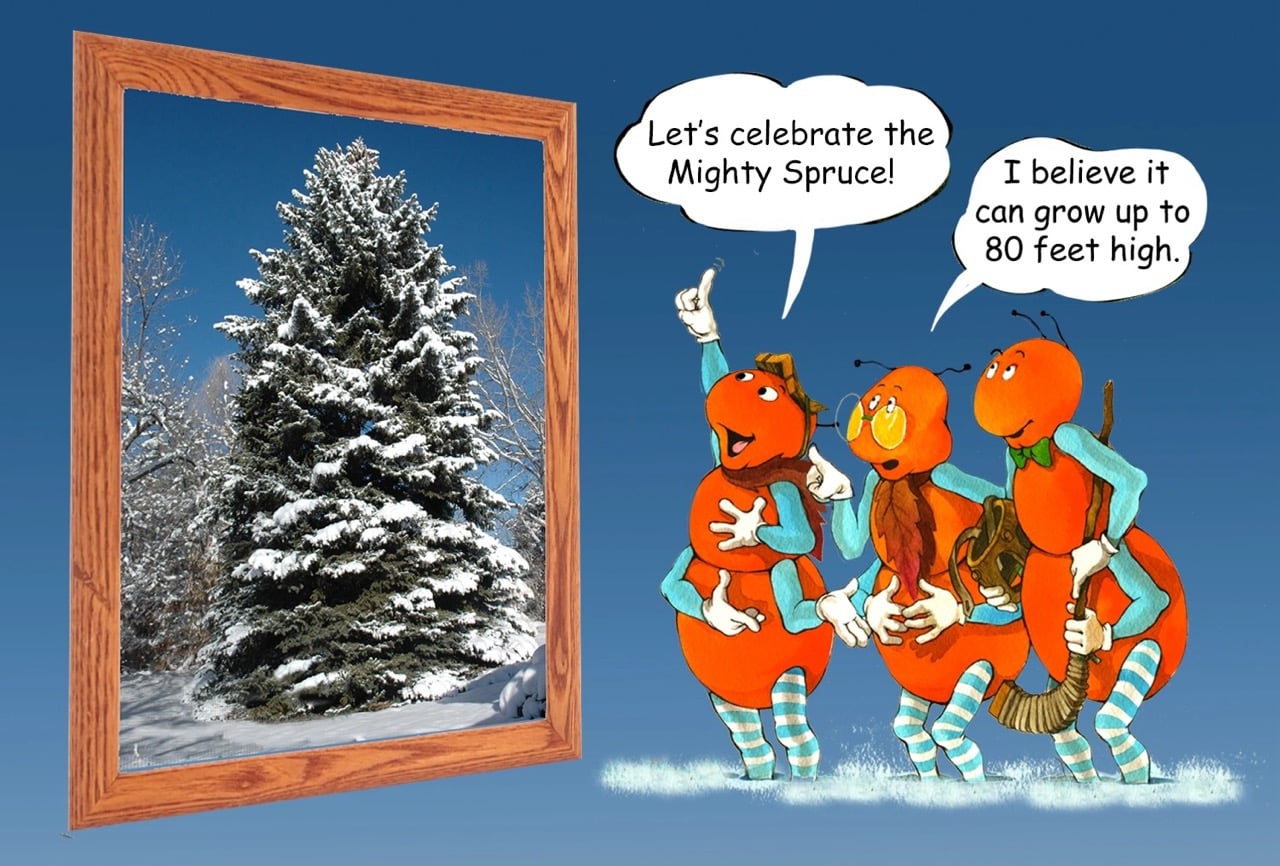
This month we chose a TREE!! A very special one called, Spruce. People living on the northern half of the globe often bring one in for Christmas. We gallavants prefer to decorate one that is still in the ground instead of a cutdown. Honor Mother Nature’s gift either way.
The Spruce belongs to a group called evergreen trees. They stay green all winter! While deciduous trees lose their leaves in the fall, the evergreen family of trees hold on to their leaves, or needles, throughout the cold season. Their whole system kind of slows down, like a bear hibernating in a den or a cave, until the spring comes.
The Spruce belongs to a group called evergreen trees. They stay green all winter! While deciduous trees lose their leaves in the fall, the evergreen family of trees hold on to their leaves, or needles, throughout the cold season. Their whole system kind of slows down, like a bear hibernating in a den or a cave, until the spring comes.
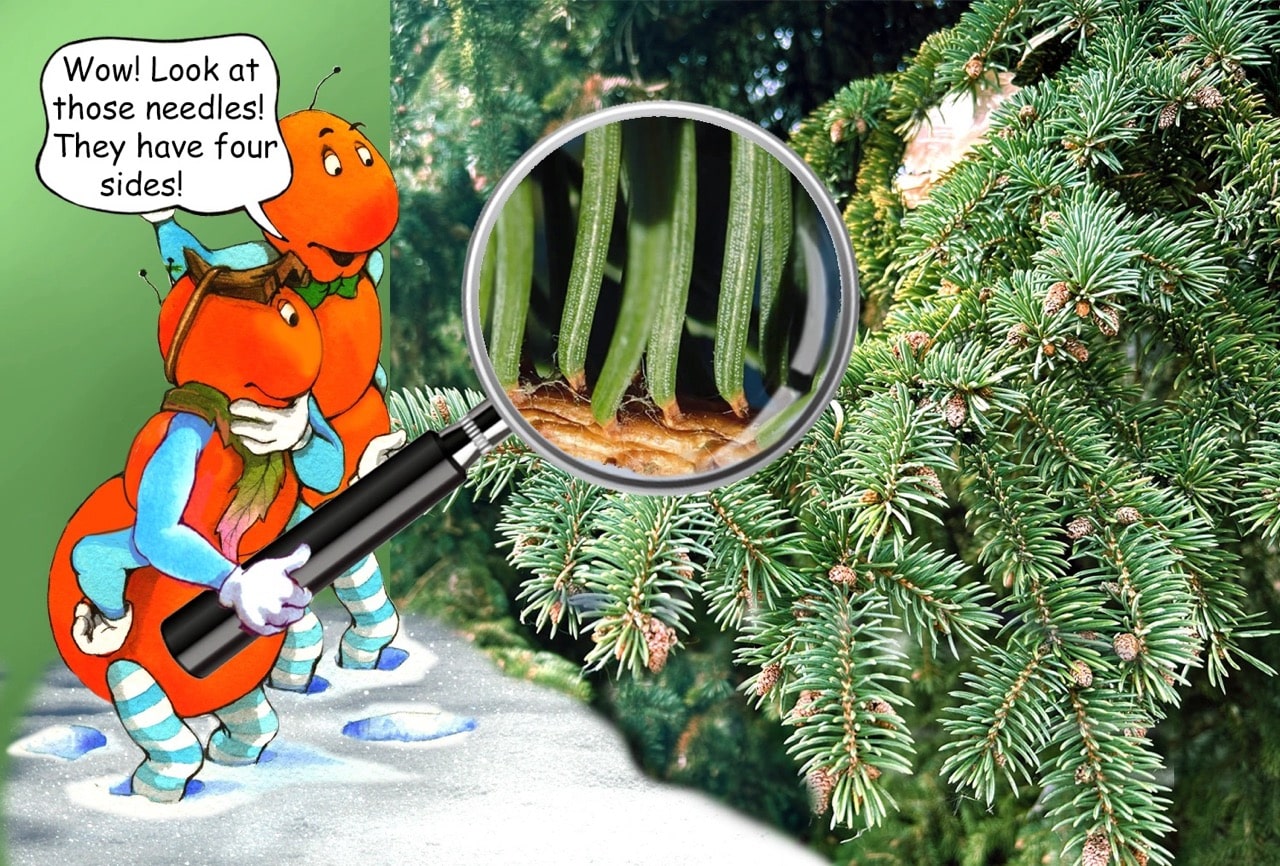
The leaves of the spruce are short, sharp and skinny. They’re called needles. They grow close together and cover every twig. The twigs cover every branch. The branches grow along the tree trunk in a spiraling pattern so there are space and light for each one.
The bark of the trunk is flaky and thin. It is greyish brown on most types of spruce.
As the tree rests in the winter, it gathers up lots of energy for the spring. Together with millions of plant species, it then bursts out in full bloom, pollen and all! The spruce has both male and female flowers appearing on the same tree at the same time!

The male flowers grow on the lower branches, while the bigger, female ones grow higher up. The wind helps by blowing the pollen from the male flowers upward, so the female flowers get fertilized. Once that happens, these flowers turn into cones. The cones are covered by scales and are a little pointy at the ends. They dangle together from the branches.
Inside each scale, there are a couple of seeds. The seeds have little sails attached so they can fly on a breeze, instead of just dropping to the ground. Squirrels, chipmunks, and mice love the seeds and store some of them for the winter.
Inside each scale, there are a couple of seeds. The seeds have little sails attached so they can fly on a breeze, instead of just dropping to the ground. Squirrels, chipmunks, and mice love the seeds and store some of them for the winter.
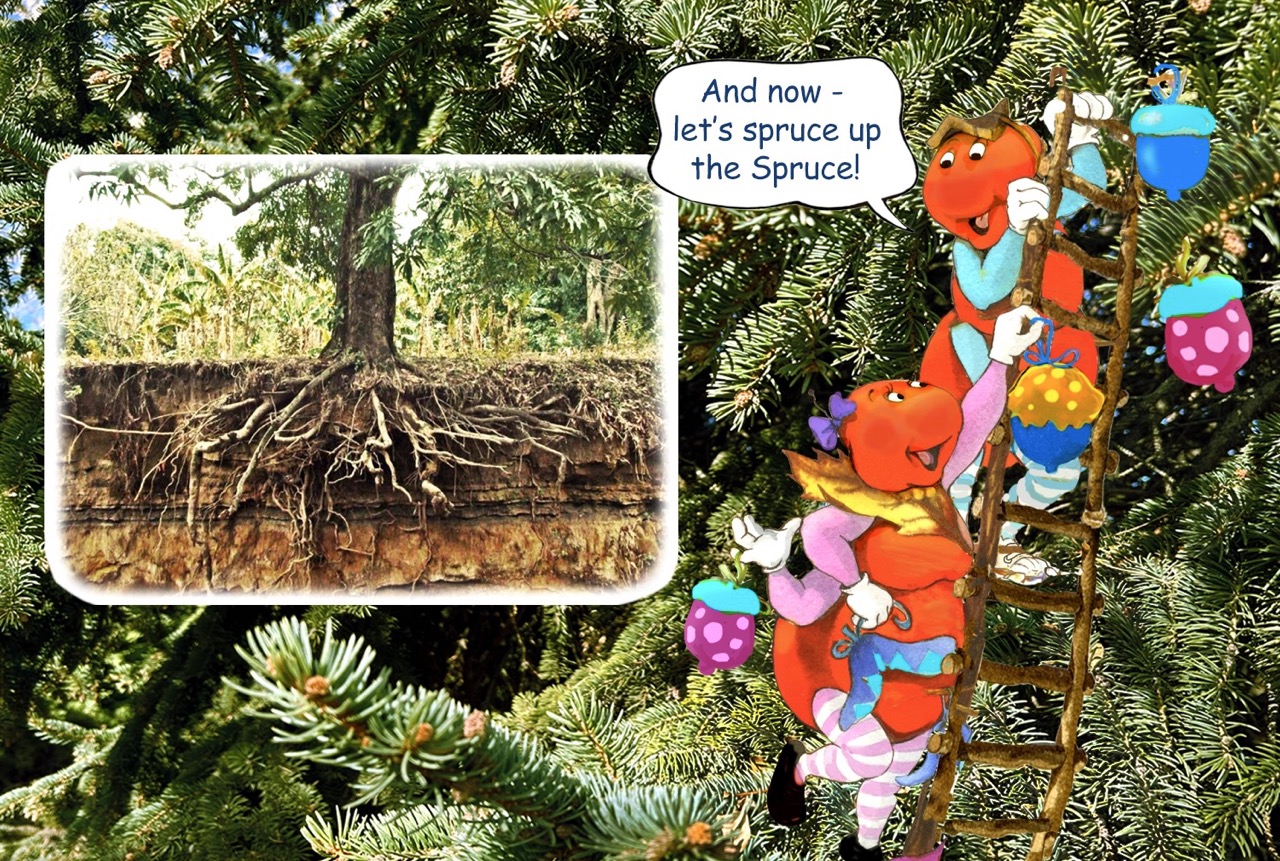
Now what keeps this huge tree stuck in the ground? Roots, of course! The roots of a spruce need to be strong and hardy, because a tree growing way up into the sky, needs a good ‘anchor’. Some trees may develop a taproot, which grows straight down, but most of the root system grows horizontally outward, just a couple of feet below the surface. It spreads wide to suck up nutrients and water and, naturally, to hold on!
Trees in all the forests, worldwide, help to create oxygen for us to breathe. Think of them as the ‘lungs’ for our planet. Important? You bet! So, when you can – help by planting a tree!
Trees in all the forests, worldwide, help to create oxygen for us to breathe. Think of them as the ‘lungs’ for our planet. Important? You bet! So, when you can – help by planting a tree!
Join our Newsletter:
Hey kids and parents! Don’t miss out on the fun—join our Gallavants mailing list today! Be the first to know when we reveal the next Plant of the Month with more exciting facts, colorful adventures, and nature surprises. It’s a fun way to learn together and stay connected to the amazing world of plants. Sign up now and let the discoveries bloom!