
Plant of the Month
This is our Plant of the Month section, where we introduce you to a new plant each month.

February – Juniper
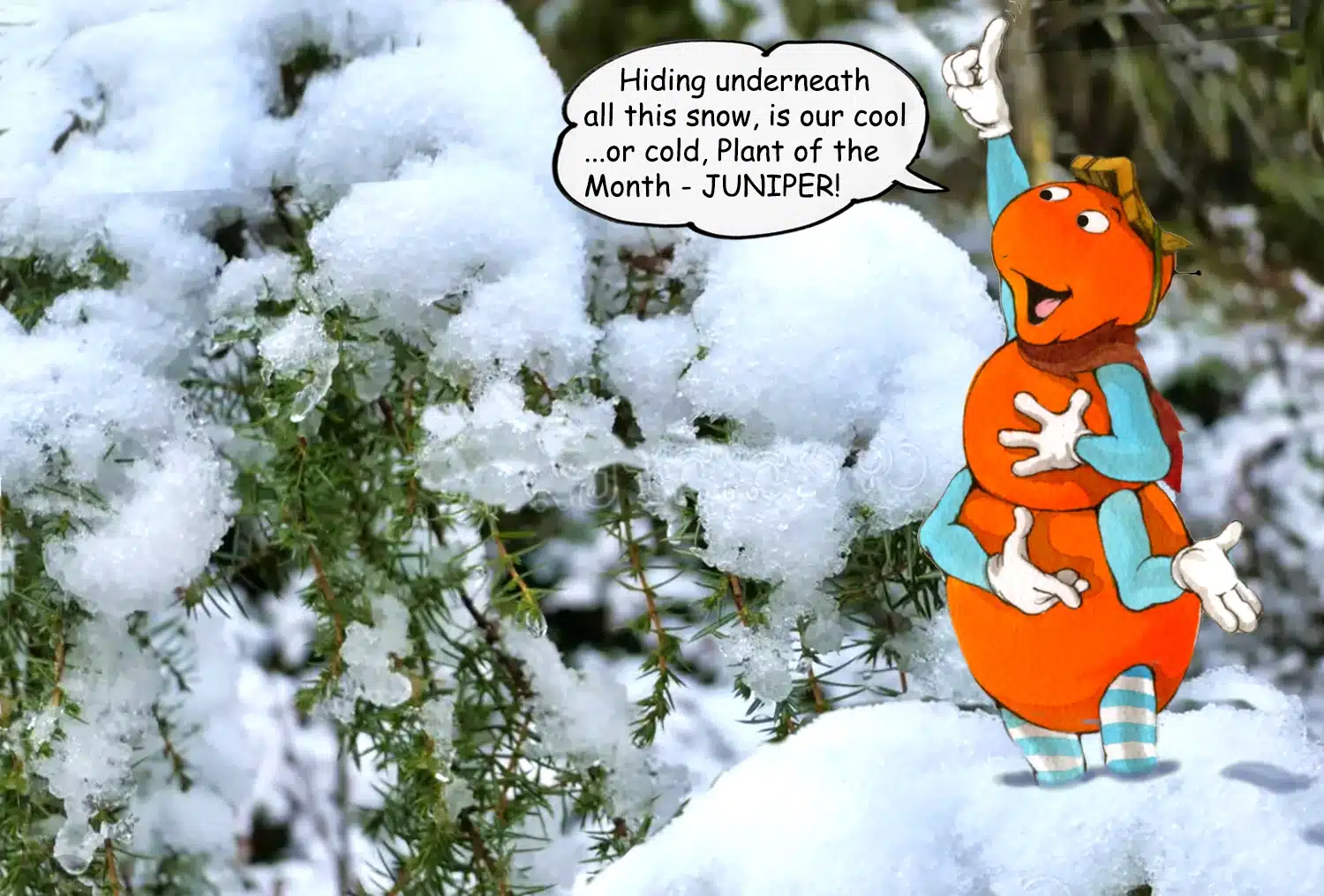
We’ve got one more conifer or evergreen for you – Juniper! This can be a tree or a shrub. As a tree it can grow up to 10 feet tall, and as a shrub it’s bushy, growing outward instead of upward. Common Juniper grows all around the world in the northern half of the earth. It’s a tough one! It can tolerate harsh weather and grow way up high on mountain sides. Junipers can also live a long time. The male trees especially. Maybe a couple thousand years! How about that one! Of course, it stays green all year like all conifers do. “Ever green”, indeed!
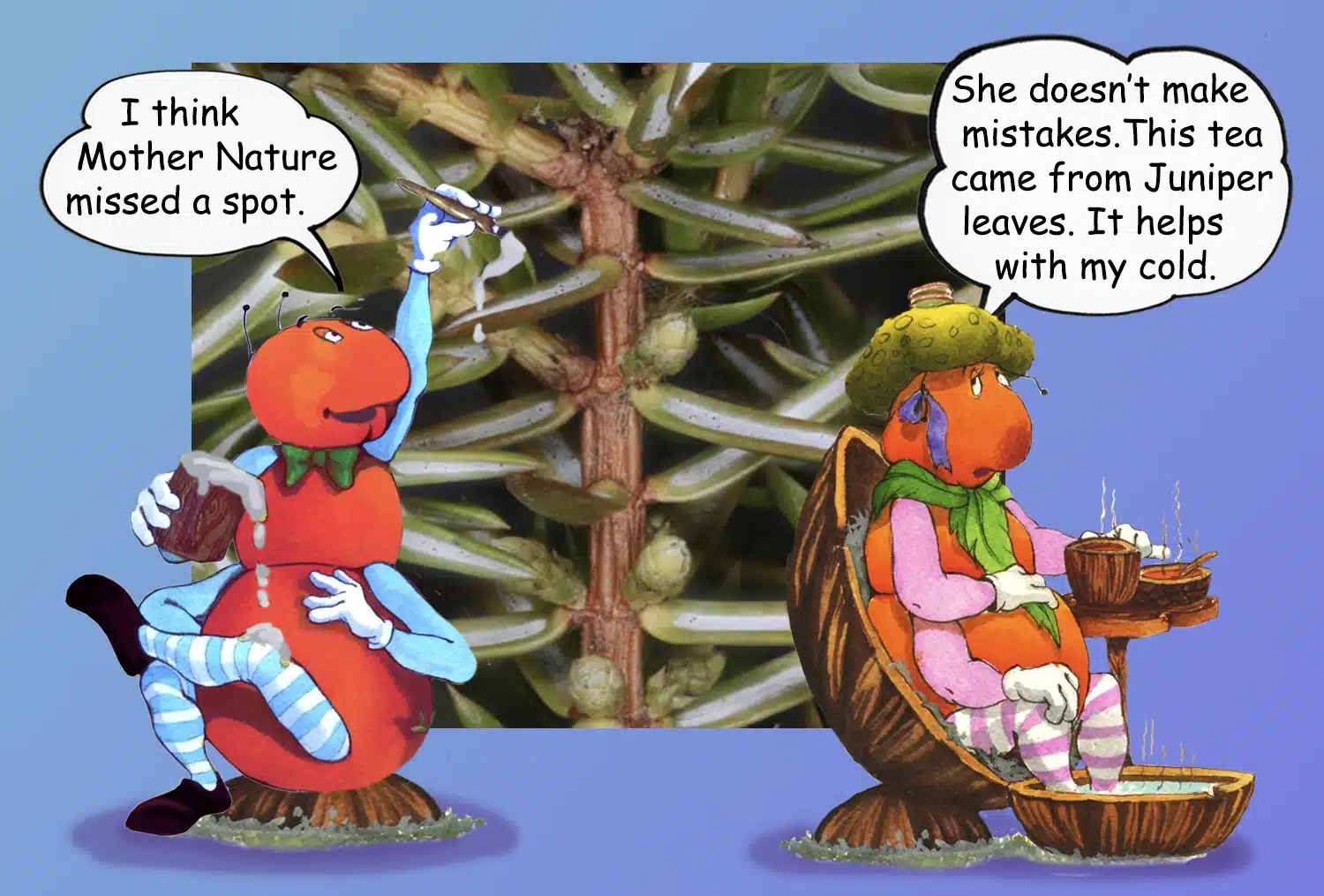
Now to that green part. The needlelike leaves are short and sharp. There is a whitish stripe along the top of the leaf. The needles grow in triplets, spiraling along the young stems. On a shrub, they cover the twigs and branches, making the greenery thick and dense. That makes this bush very popular with birds and other small critters, because it offers safety and protection from predators and harsh weather. The juniper needles can be burned, which creates a wonderful smell, and a tea made from them, can help make breathing easier if you have a cold.
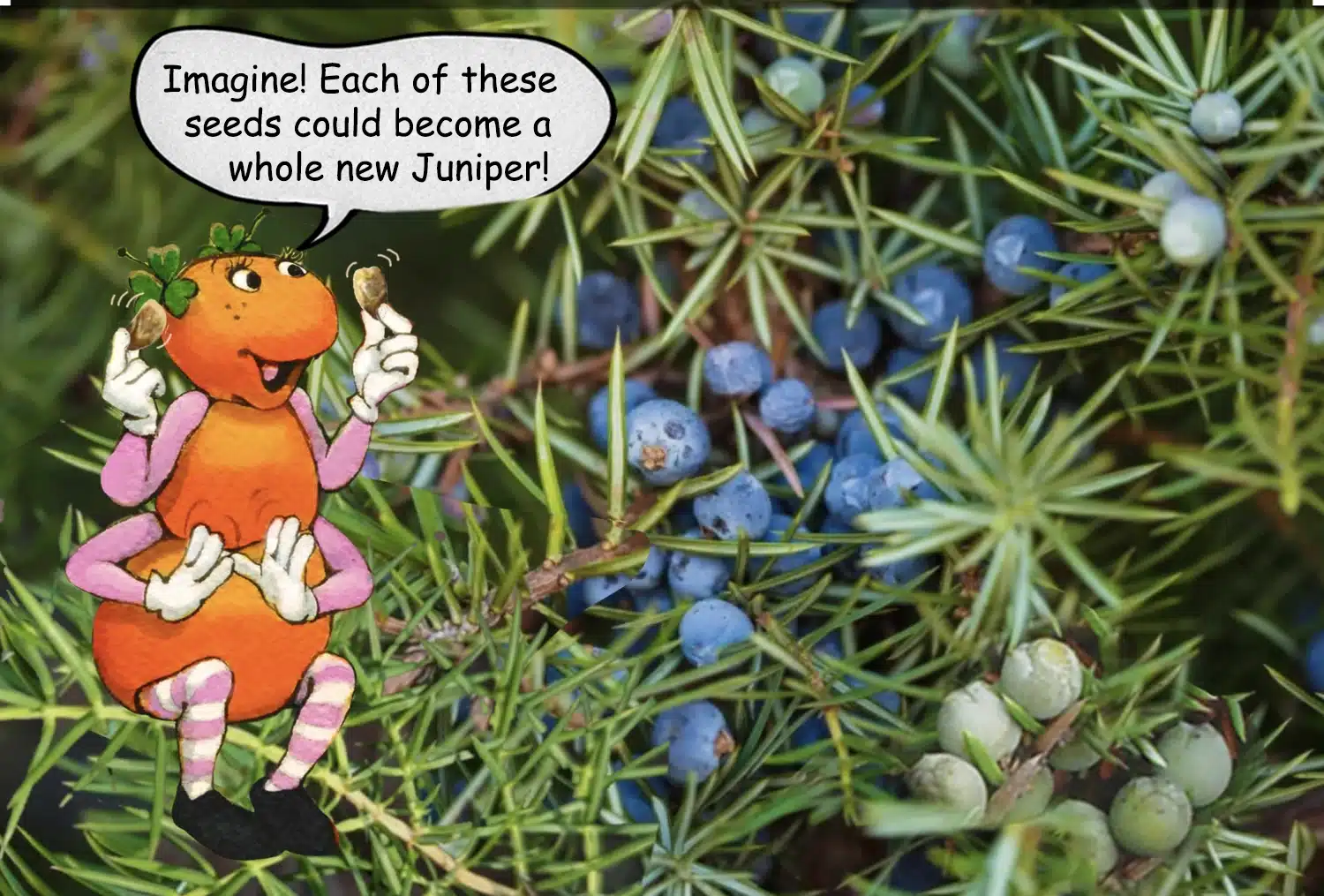
The Juniper is either a female or male plant. The female flowers are small and cone shaped. When these are pollinated, they turn into green little balls. It takes about 18 months to 2 years for them to ripen and become dark blue. Some people call them Juniper ‘Berries’, but they’re really cones. These ‘berries’ have 1-3 little hard seeds in each one. The male plant has small, yellowish flowers. These are loaded with pollen. In the spring when both female and male junipers are blooming, the bright, yellow pollen from the male flowers, is carried by the wind to nearby female ones.
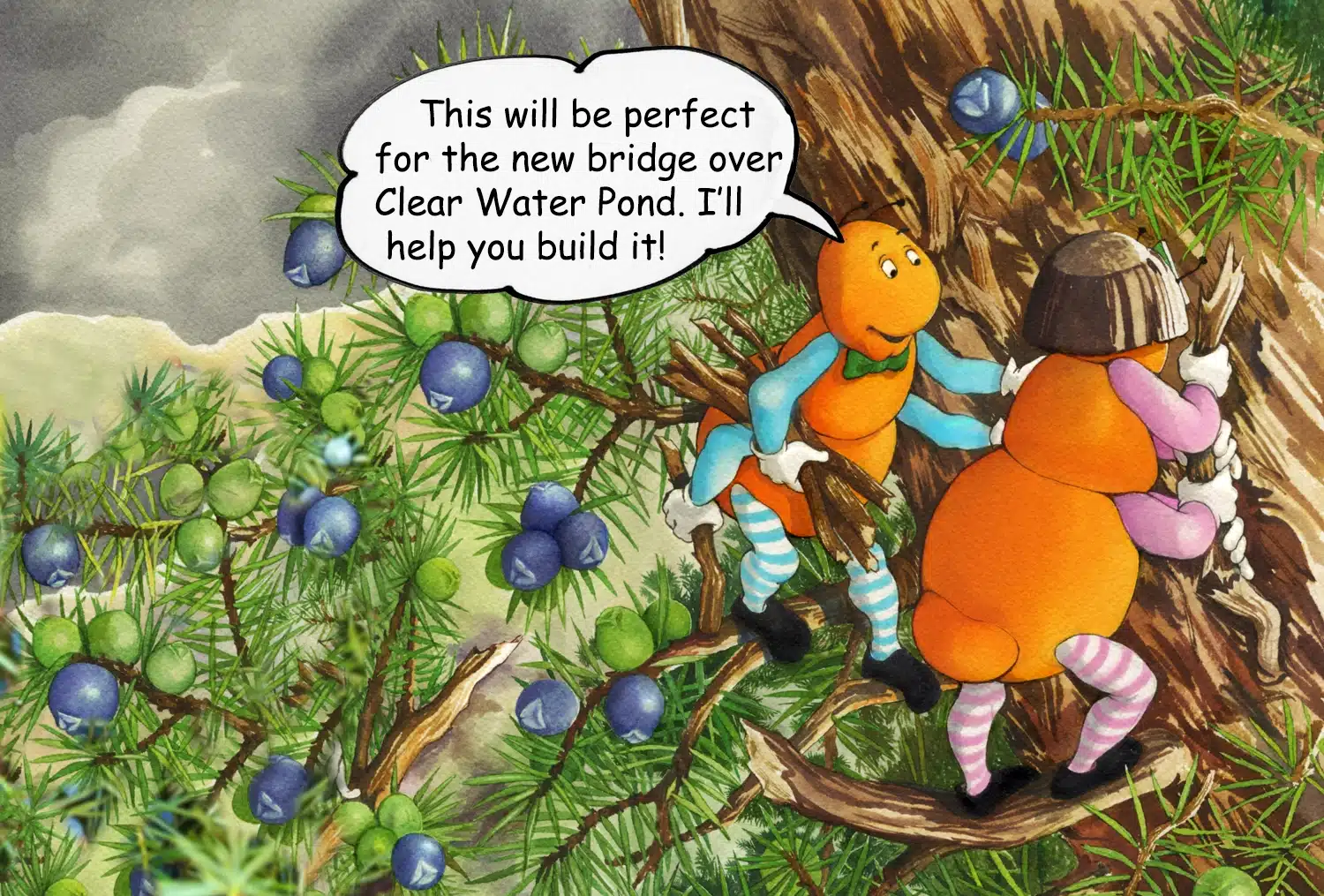
Birds like to eat the ‘berries’ and spread the seeds in their poop, so there will be more junipers plants. The Common Juniper’s bark is scaly and brownish grey. It can come off in short strips. The wood of the Common juniper is super hard. Kubo over there is with one of our ConstructAnts. They use the wood to construct furniture and stuff. Carpenters like juniper wood because it is resistant to rot and insects. It is ideal for outdoor projects like fences. Some carpenters like to make rustic looking outdoor furniture with it, because the wood can come in cool, swirling shapes.

There are many different junipers belonging to the same family. This species is one of the most widespread of evergreen trees in the entire top half of the globe. It can handle drought. It grows in harsh weather. It offers food to birds. It is home to many of this earth’s little creatures. It keeps its green beauty all year around. Its berries and leaves give us medicine and adds flavor to our food. And, as all trees do, help by producing oxygen for us all to have fresh air to breathe. We Gallavants celebrate Juniper not just as our ‘Plant of the Month’ – but all year long!
Join our Newsletter:
Hey kids and parents! Don’t miss out on the fun—join our Gallavants mailing list today! Be the first to know when we reveal the next Plant of the Month with more exciting facts, colorful adventures, and nature surprises. It’s a fun way to learn together and stay connected to the amazing world of plants. Sign up now and let the discoveries bloom!