
Plant of the Month
This is our Plant of the Month section, where we introduce you to a new plant each month.

July – Poison Ivy
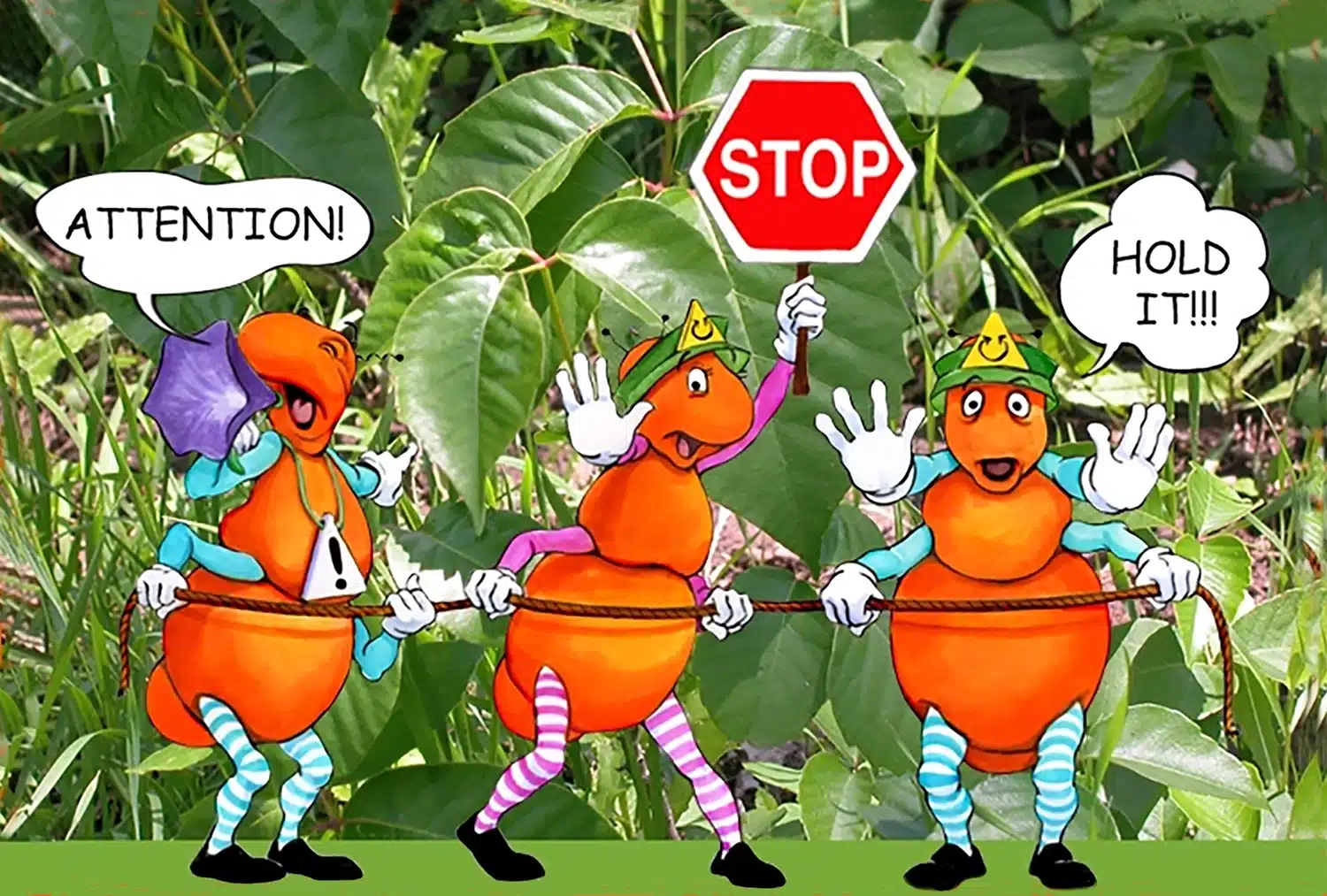
NEWS ALERT!
The PatrolAnts have found another patch of Poison Ivy! Actually – Don’t hold it!
Don’t even touch it! It’s just what it sounds like: POISON!
It climbs. It creeps. It can even become a big bush.
If any part of this plant touches your skin it can give you a nasty rash!
If that should happen, splash it with water right away or hop in a stream if there is one nearby! Not everyone gets a rash, but most humans do.

Check out the leaves!
Poison Ivy has triple leaves – three pointed. A good rule to remember about Poison Ivy is: “LEAVES OF THREE – LET IT BE!” The edges of the leaves can be smooth or jagged or lobed. They are green and shiny in the spring and summer. In the fall they turn orange or red. They really look beautiful, but Great Mama Gaia, can they get you in trouble! A blistering, itchy rash of trouble!

Poison Ivy can be found in most states of the USA. It grows in almost any kind of environment. This Poison Ivy plant is blooming! There are clusters of little yellow and green flowers. They have five petals. These bunches grow on the main stalk right where the stems of the leaves start out. Don’t even THINK of getting close enough to smell them! Poison Ivy plants bloom from May to July.

Late summer the flowers turn into yellowish, white, waxy-looking berries.
These berries are for the birds! Truly!
Migrating birds love to eat them on their way flying south. The seeds pass right through and get dropped with the bird-poop in new places.
This is just ONE way this plant can spread.

Tube-like roots, called rhizomes, grow sideways in all directions underground.
They rarely grow deeper than a foot beneath the surface and can spread up to twenty feet wide. New little Poison Ivy plants sprout up along these rhizomes. Lots and lots of them! A whole network can spread out, creating big patches of this busy, not-so-popular plant.

We gallavants don’t go anywhere NEAR this plant and neither should you! This doesn’t mean you should be afraid to go out in nature. Just learn the DO’s and DON’T’s where YOU live, so you can watch where you’re going and avoid poison ivy altogether.
Join our Newsletter:
Hey kids and parents! Don’t miss out on the fun—join our Gallavants mailing list today! Be the first to know when we reveal the next Plant of the Month with more exciting facts, colorful adventures, and nature surprises. It’s a fun way to learn together and stay connected to the amazing world of plants. Sign up now and let the discoveries bloom!