
Plant of the Month
This is our Plant of the Month section, where we introduce you to a new plant each month.

March – Pussywillow
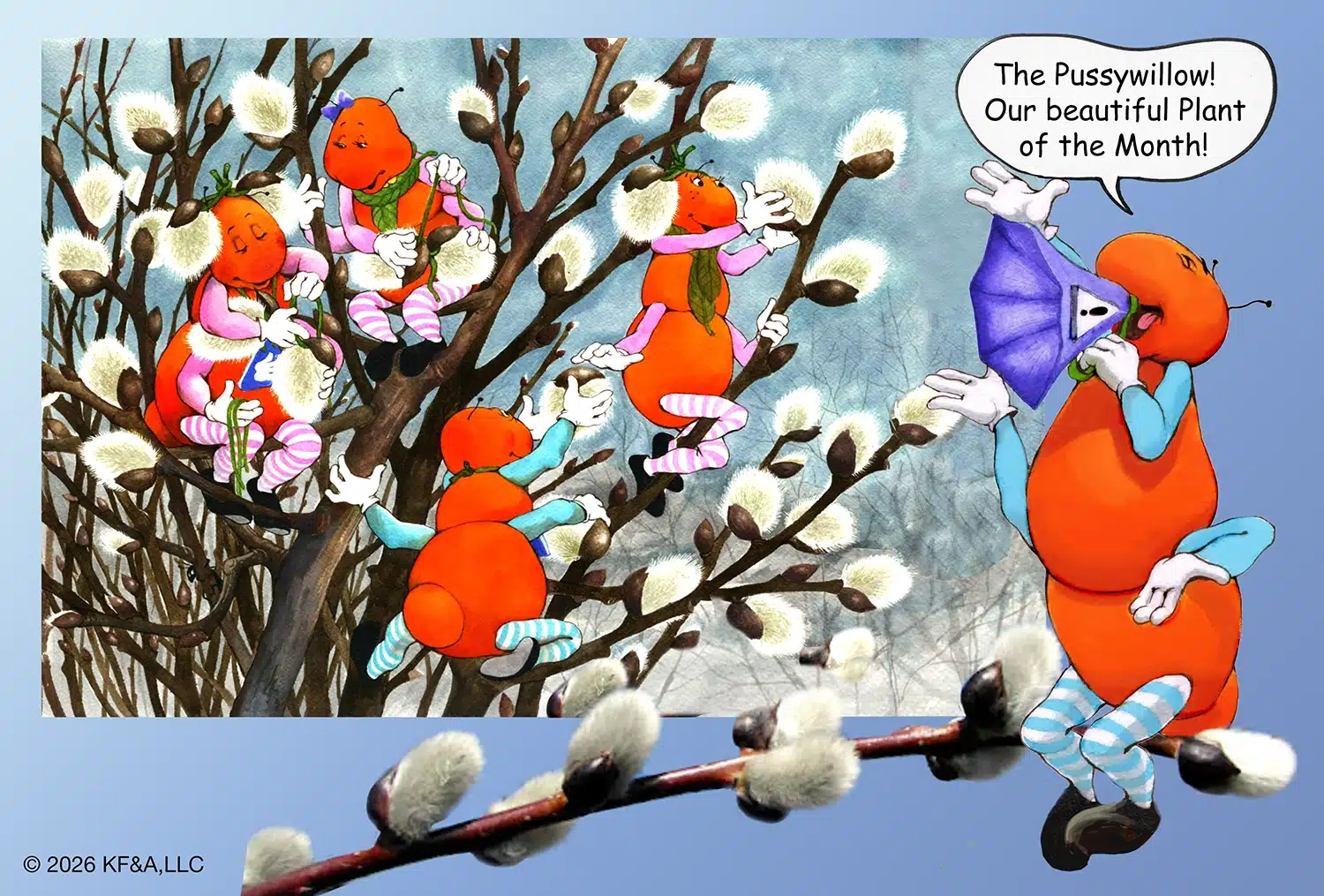
Spring is in the air! Our Plant of the Month, the Pussywillow, produces little fuzzy promises of that, on every branch. These catkins pop out from hard, dark-brown scales and show up as silky, puffy little things, which look like small pussycat-paws. That’s how this tree, or shrub, got its name. We Gallavants like to make earmuffs with them, keeping our heads warm. Perhaps they do the same for the flowers forming within? March can still be a cold month, you know. The Pussywillow likes a lot of water and prefers to grow in wet, moist areas. Several slim trunks grow from the base.

Female and male trees are separate plants. The furry, soft catkins you can see above, only grow on the male tree. And grow they do! They get bigger and longer and soon they show off with bunches of tiny florets which are then covered with bright yellow pollen. The female Pussywillow has catkins, too. These are totally different and look like little spiky, green caterpillars. When the female and male flowers start to bloom there is an amazing buzz-fest! Bees, butterflies and all kinds of insects get their first big meal of pollen and nectar after their long winter nap.

All this blooming happens before the leaves show up. These are long and slim, with smooth or slightly jagged edges. The topside is green, while the color underneath is a light greyish green. The leaves grow by alternating along the smooth straight branches. These branches are sometimes used to make baskets, because they’re strong and flexible. Pussywillows are deciduous, which means they lose all their leaves in the fall after they turn a golden yellow. Most deciduous trees change the colors of their leaves in autumn because chlorophyll, that’s the green stuff, disappears as the trees prepare for the winter.

The bark of the willow tree family contains something called salicin. This can be used as medicine for headaches, just like aspirin, and a salve made from the bark can help heal little boo-boos. Pussywillows have thirsty roots, which branch outward instead of downward, searching for water. Their root systems grow as messy, fibrous nets just 1-3 feet under the surface. These roots are good at finding the moisture the plant needs, sometimes getting into waterpipes, which can be a bit of a problem. The Pussywillow also provides food and shelter for many birds and animals, launching an early celebration of spring!
Join our Newsletter:
Hey kids and parents! Don’t miss out on the fun—join our Gallavants mailing list today! Be the first to know when we reveal the next Plant of the Month with more exciting facts, colorful adventures, and nature surprises. It’s a fun way to learn together and stay connected to the amazing world of plants. Sign up now and let the discoveries bloom!