
Plant of the Month
This is our Plant of the Month section, where we introduce you to a new plant each month.

May – Clover
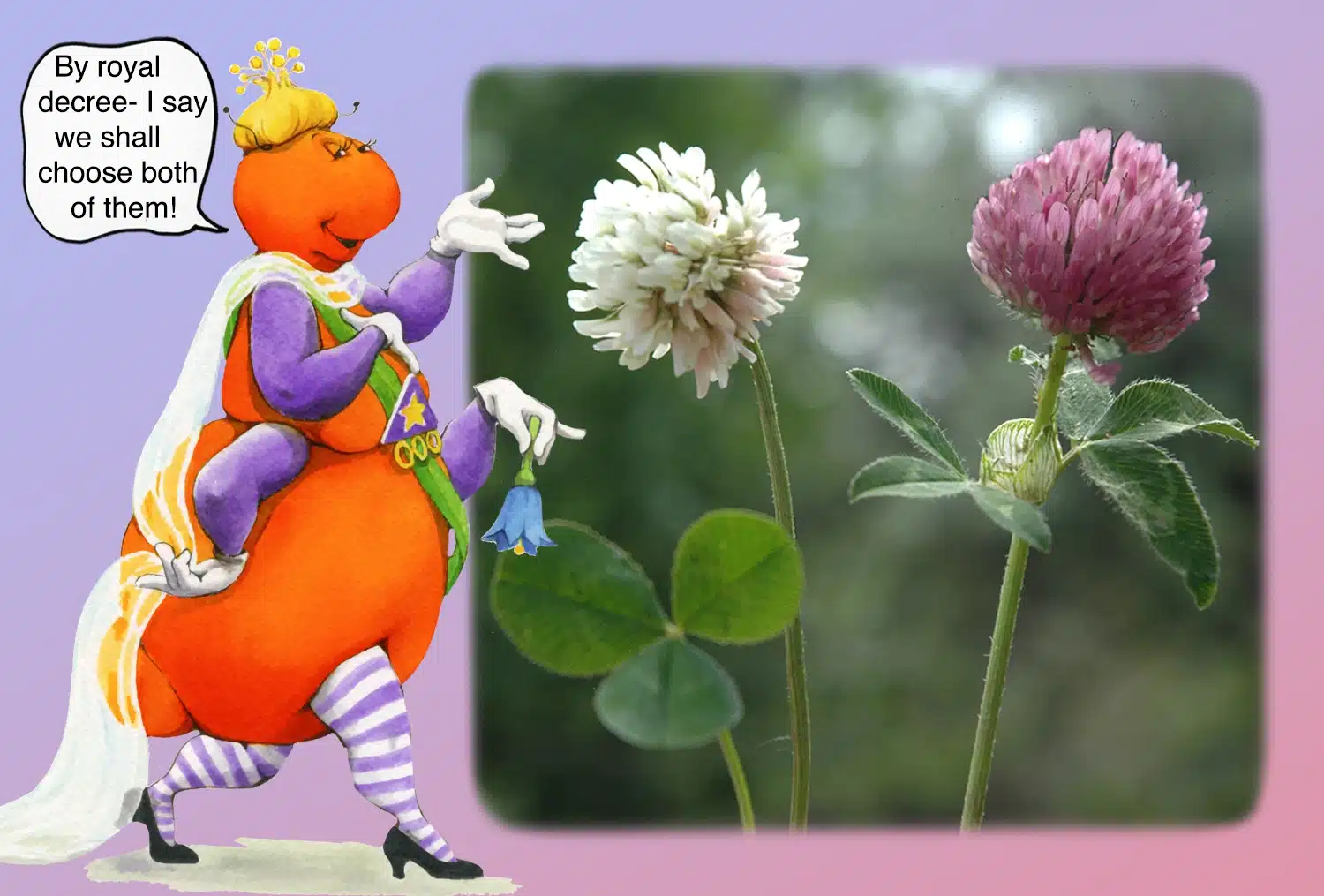
May is here, so may we present this month’s Plant to you? Clover! It grows all over the planet. There are hundreds of different varieties of this plant, so we chose two for our Plants of the Month – Red Clover and White Clover. They are all part of the ‘Pea Family’. Clover plants usually last only a year or two. Of course, new ones pop up from seeds like most other plants growing in nature. Clover tolerates shade and adds nutrients to the soil. Instead of having thirsty grass lawns, that you humans mow all the time, White Clover lawns are soft and okay to walk on.
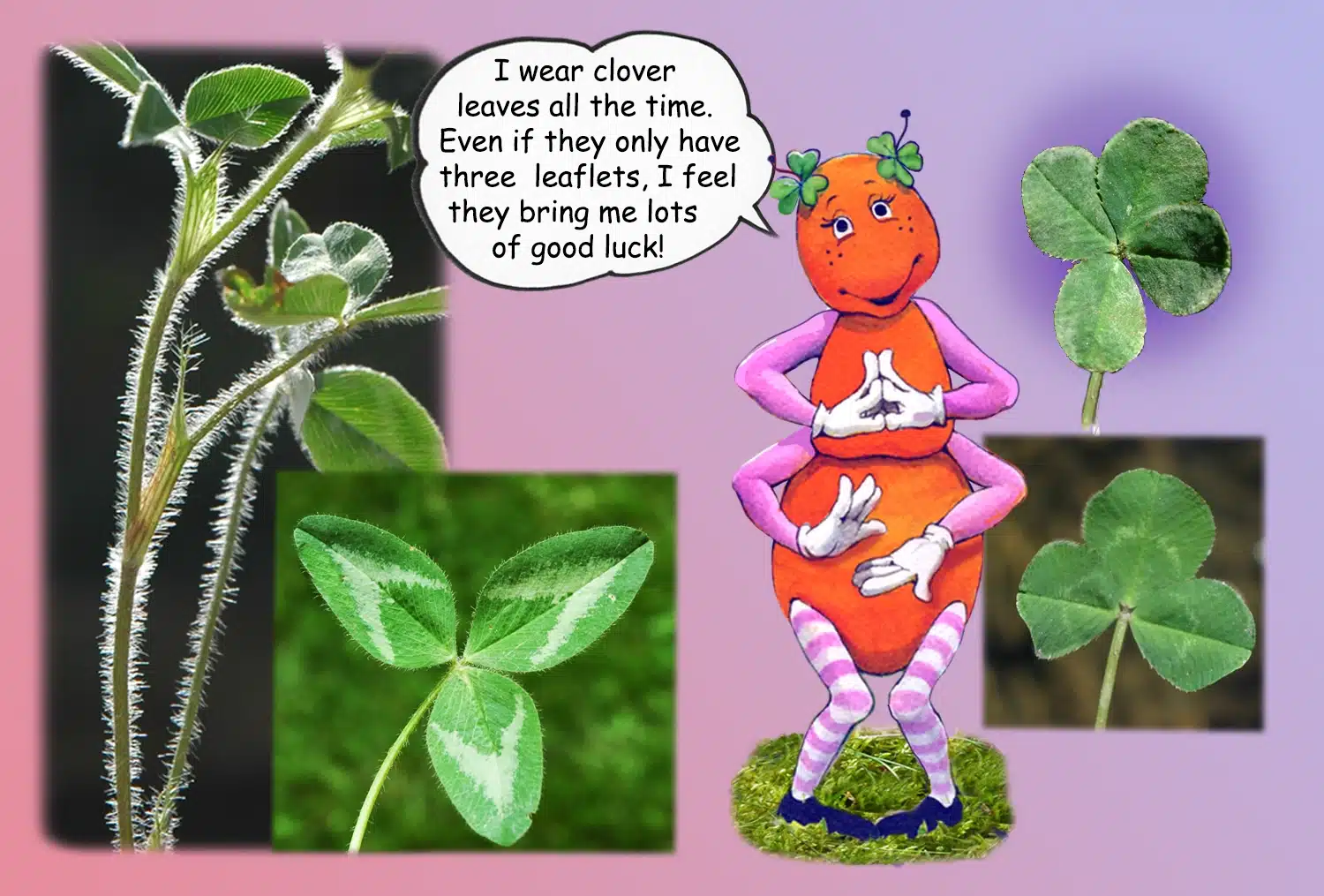
The leaves of Red and White Clover are called compound leaves with three leaflets growing from the same point. The Red Clover ones have an oval shape, and on each of the leaflets there is a lighter green “V”. The stem and the leaves of the Red Clover can also be a bit fuzzy. The leaflets of the White Clover are smaller and rounder. When you find a four–leaf clover, which brings you good luck, most likely that’s from a patch of these. White Clover plants don’t grow as tall as Red Clover do, but they grow thicker and closer to the ground.
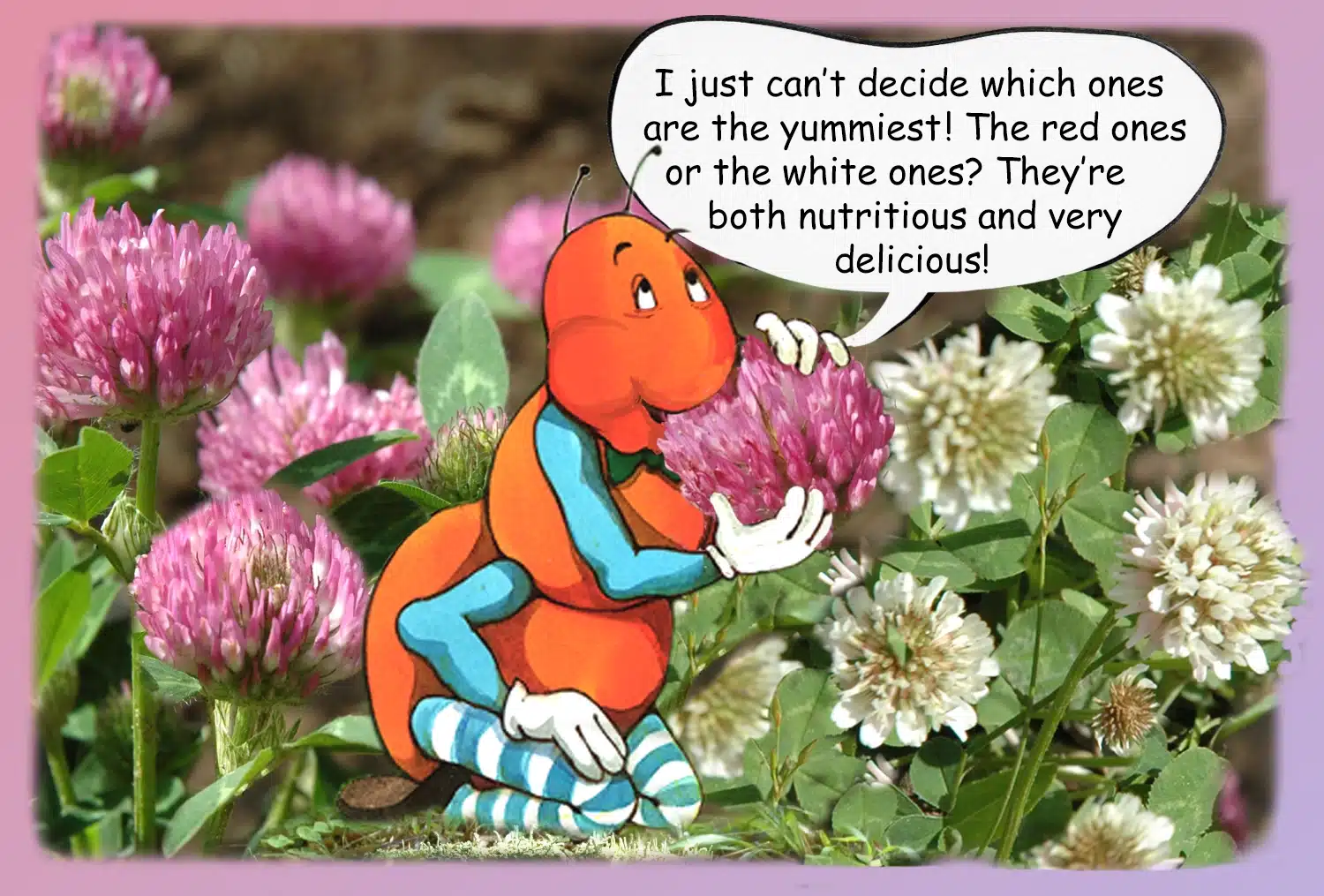
The flowers of both plants are made up by lots of little florets and called compound flowers. On the Red Clover these florets form perfect globes or egg shapes. They can be used for both food and medicine. It contains all kinds of vitamins and minerals. White Clover flowers are smaller and sometimes show up with light pink florets at the base. The flowers from both Red and White Clover are sweet and delicious. You can eat the whole plant from blossom to root! A tea is made from flowers, and young leaves can be good in a salad, but the roots should be boiled.
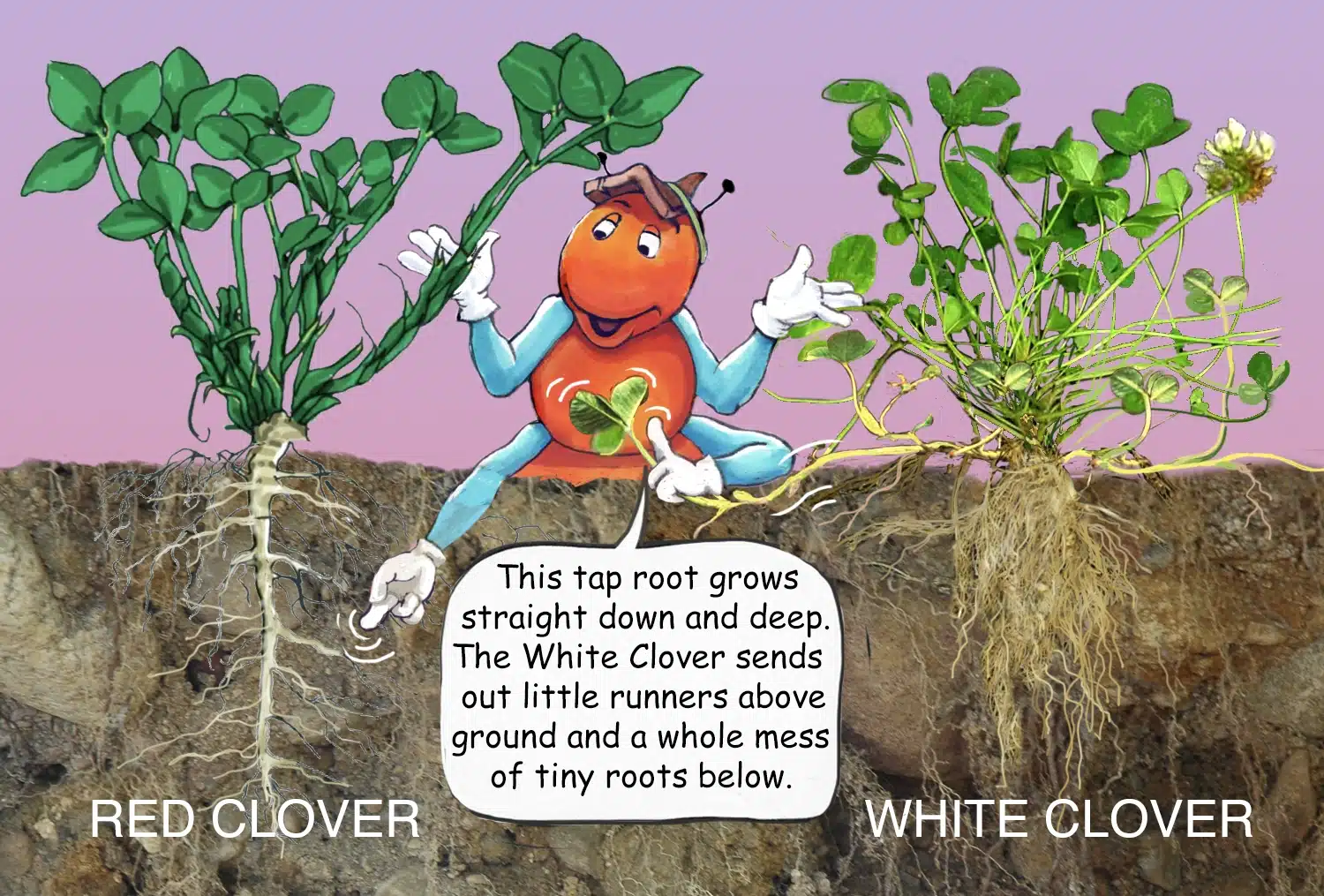
Now, down to the very basics – Roots! They hold on to the soil. Clover roots keep it nice and airy, so it doesn’t get hard and dry and wash away. These roots can go deep. On the Red Clover it is a taproot with lots of tiny roots growing outward. These roots also help the soil by giving it something called nitrogen. This is true for the White Clover, as well. Both plants spread by seeds and White Clover also send out little runners from the base of the plant. As with most plants which have medicinal and edible use, it’s best not to eat a huge amount, maybe just a handful or two.
Join our Newsletter:
Hey kids and parents! Don’t miss out on the fun—join our Gallavants mailing list today! Be the first to know when we reveal the next Plant of the Month with more exciting facts, colorful adventures, and nature surprises. It’s a fun way to learn together and stay connected to the amazing world of plants. Sign up now and let the discoveries bloom!