
Plant of the Month
This is our Plant of the Month section, where we introduce you to a new plant each month.

November – Teasel
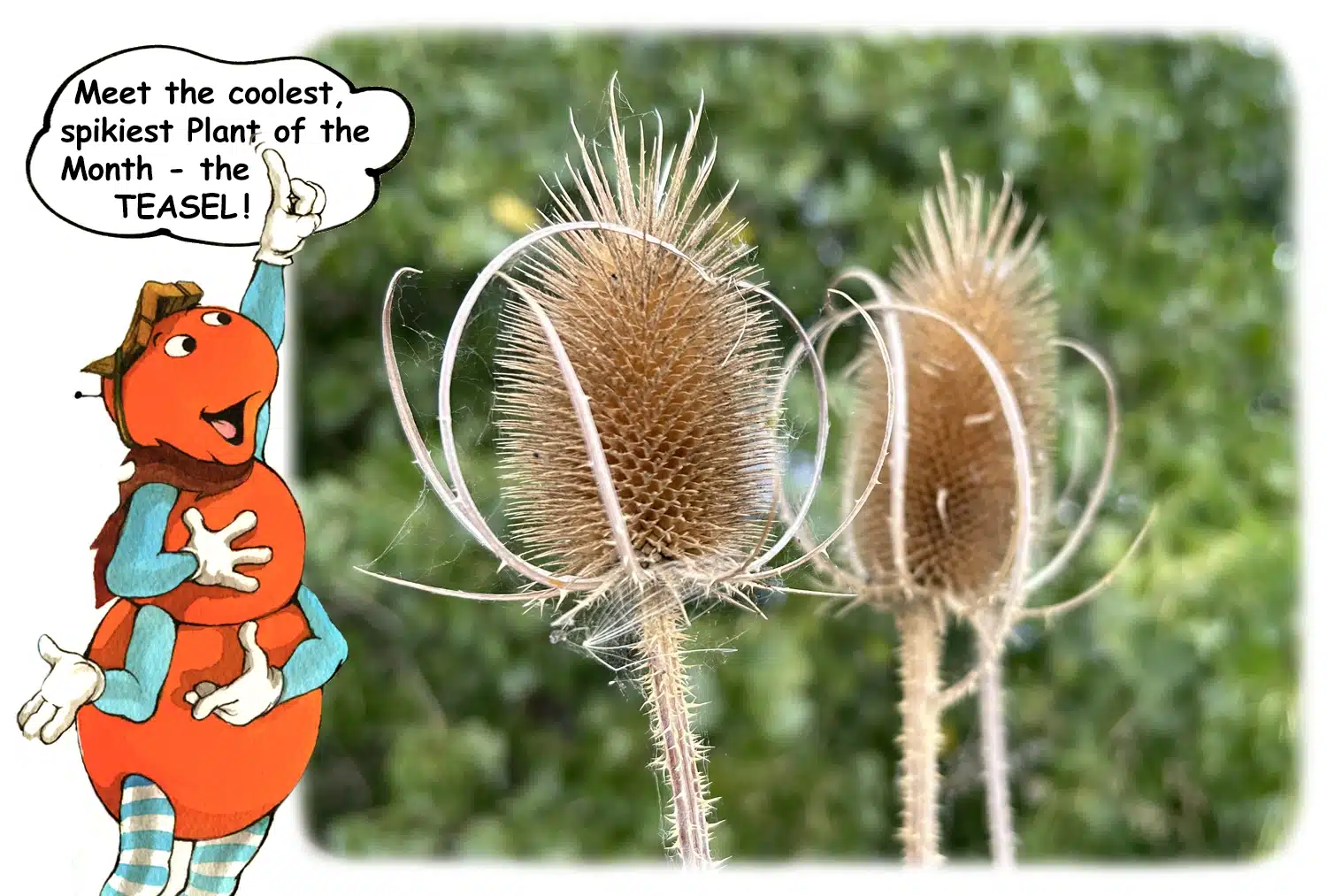
November’s Plant of the Month is the prickly Teasel. Some confuse it with thistles, which also are a thorny bunch, indeed. Both species seem to say: “Stay away! Do not come near me!” Thanks to its spiny seed head, the Teasel got its name from being used as a tool to comb and ‘tease out’ bunches of sheared wool from sheep. That was long ago, and they have been replaced by more modern tools. This plant has perhaps become a “thorn in the side” of farmers, because it is very invasive and can grow tightly together, squeezing out other native plants.
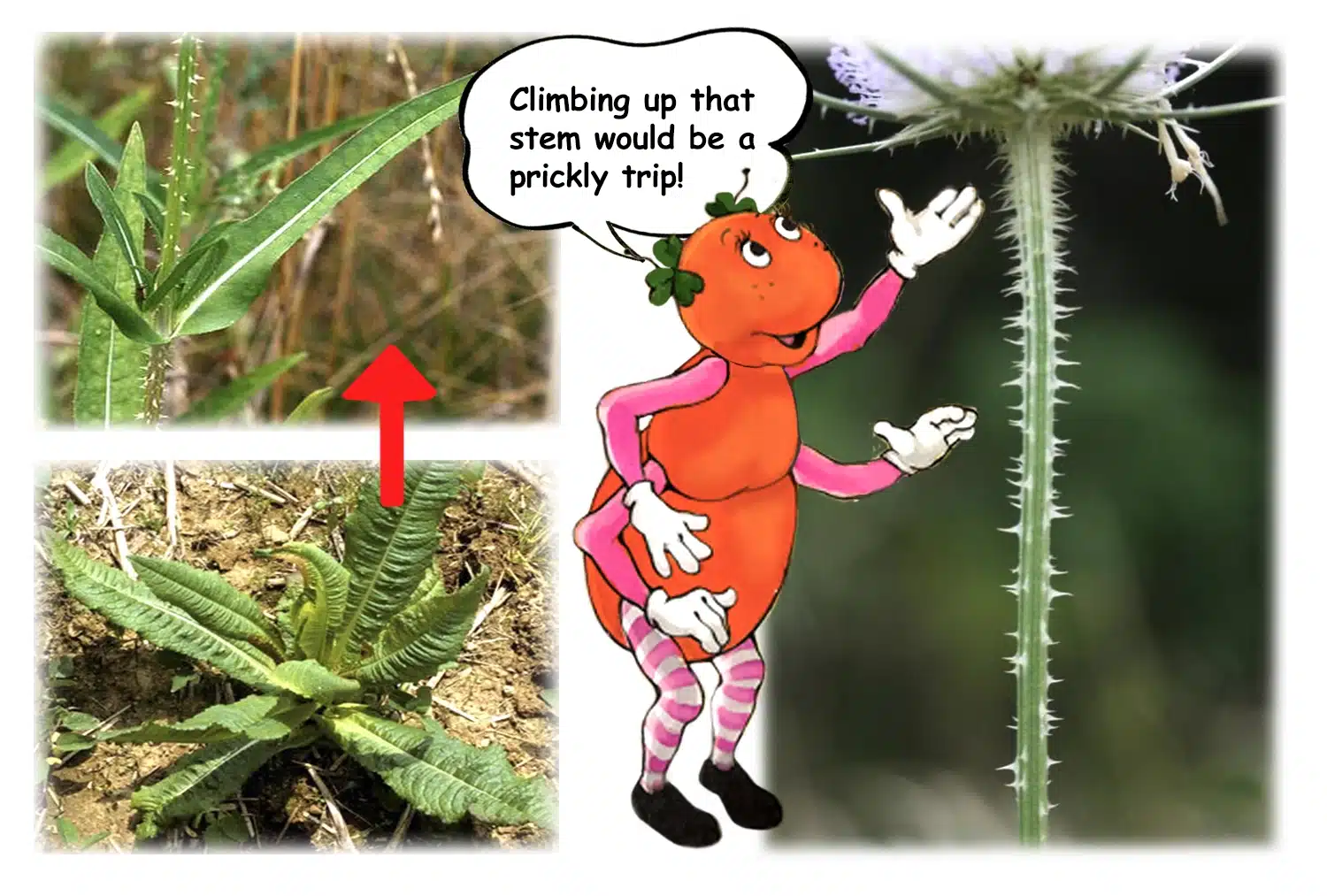
The Teasel can grow up to 4 -5 feet high. When they first appear in the spring, the leaves grow close together shading any other plant wanting to grow nearby. The stem discourages any little creature, like larvae and other invaders wanting to climb up to munch on the flowers. It would be a long, prickly trip all the way to the top where the flowers appear. The Teasel is a very hardy plant and does not need a lot of water. Once these plants have moved in, it’s difficult to evict them. Most farmers become unhappy when they see these uninvited ‘guests’ in their fields.
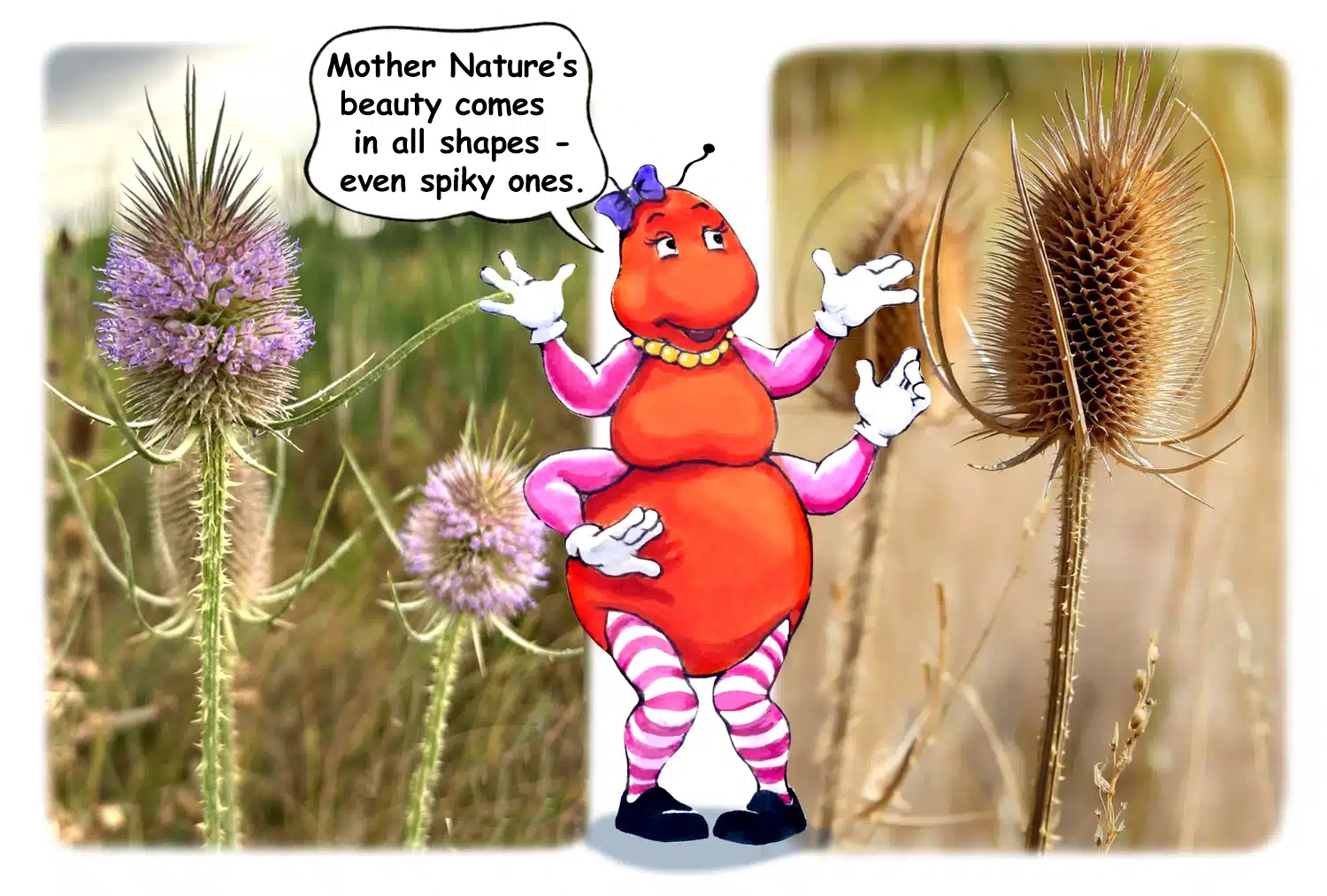
Teasels have large, spiky heads shaped like eggs. Rings of tiny purple flowers seem to take turns to bloom in the summer and even into the fall. So, what, if this plant looks unfriendly and doesn’t seem to invite anybody, bees and other flying insects love the sweet nectar they produce. The flower head has lots of spiky parts and stays looking prickly and proud the whole season. Once these spiny balls dry up, they look great in the fall’s flower arrangements. This month’s plant has a long sturdy root system, another reason why it may be difficult for farmers to get rid of them.

Because Mother Nature always provides, like nectar for the insects, this plant also has some uses in natural medicine. A tincture made from the roots can help boost the immune system, so you don’t catch a cold. Of course, people still call the Teasel a ‘weed’. That means it spreads like crazy and grows with gusto. One plant can produce seeds for a couple of thousand new plants! They grow tall together and may form what almost looks like dense, spiky forests. Big animals don’t go near them, but for the bees and butterflies the beauty and nectar are worth the spiny, prickly ‘table-setting’.
Join our Newsletter:
Hey kids and parents! Don’t miss out on the fun—join our Gallavants mailing list today! Be the first to know when we reveal the next Plant of the Month with more exciting facts, colorful adventures, and nature surprises. It’s a fun way to learn together and stay connected to the amazing world of plants. Sign up now and let the discoveries bloom!