
Plant of the Month
This is our Plant of the Month section, where we introduce you to a new plant each month.

September – Cattails
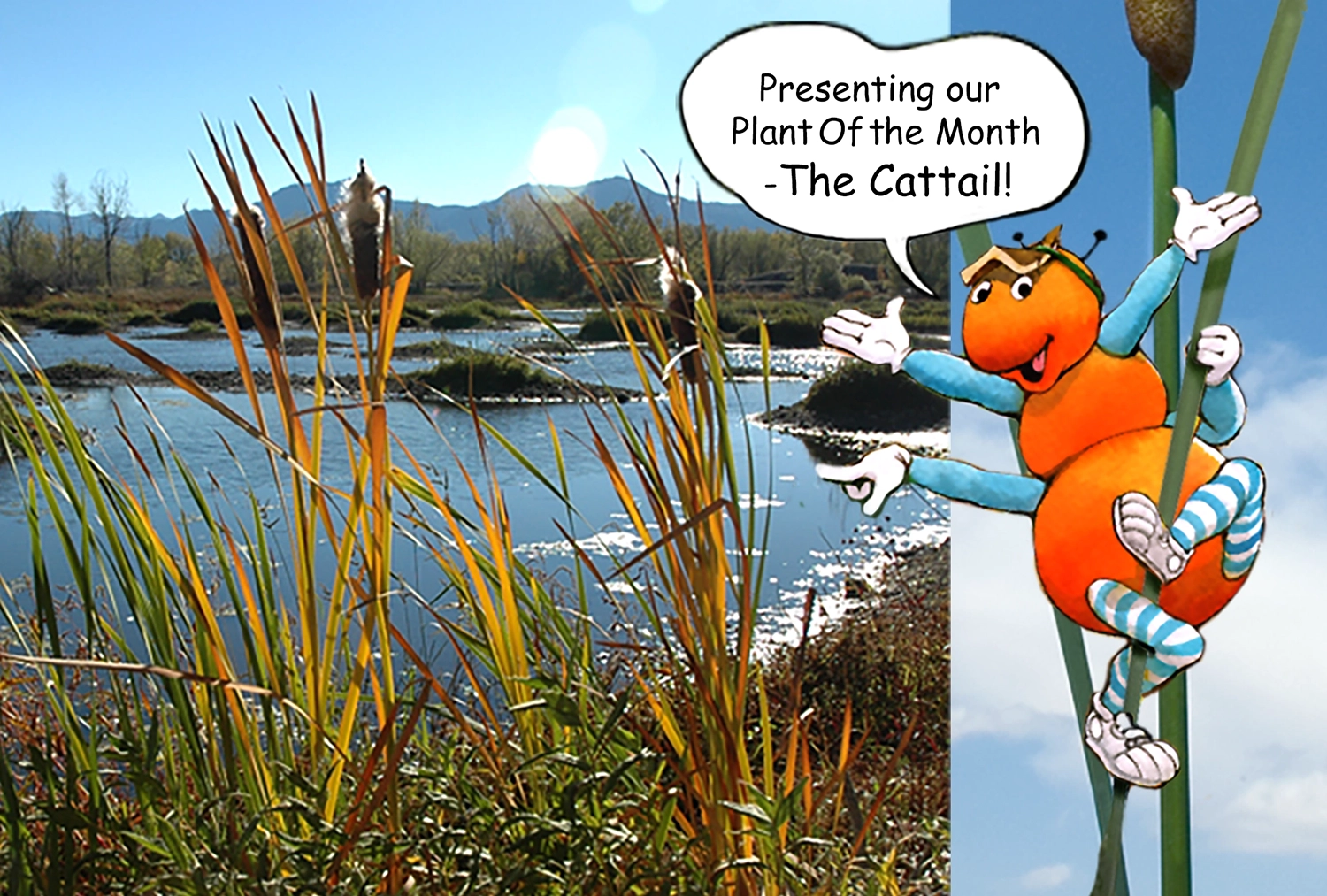
Cattails grow where there is water. They grow in the edges of ponds, lakes and marshes.
Cattails need to have “wet feet” for most of the growing season. They can grow really tall, all the way up to 10 feet!
This plant species has been around since the dinosaurs!
The thick stands of cattails can be home to all kinds of wildlife, the red-winged blackbird, ducks, and frogs to name a few.
Cattails need to have “wet feet” for most of the growing season. They can grow really tall, all the way up to 10 feet!
This plant species has been around since the dinosaurs!
The thick stands of cattails can be home to all kinds of wildlife, the red-winged blackbird, ducks, and frogs to name a few.
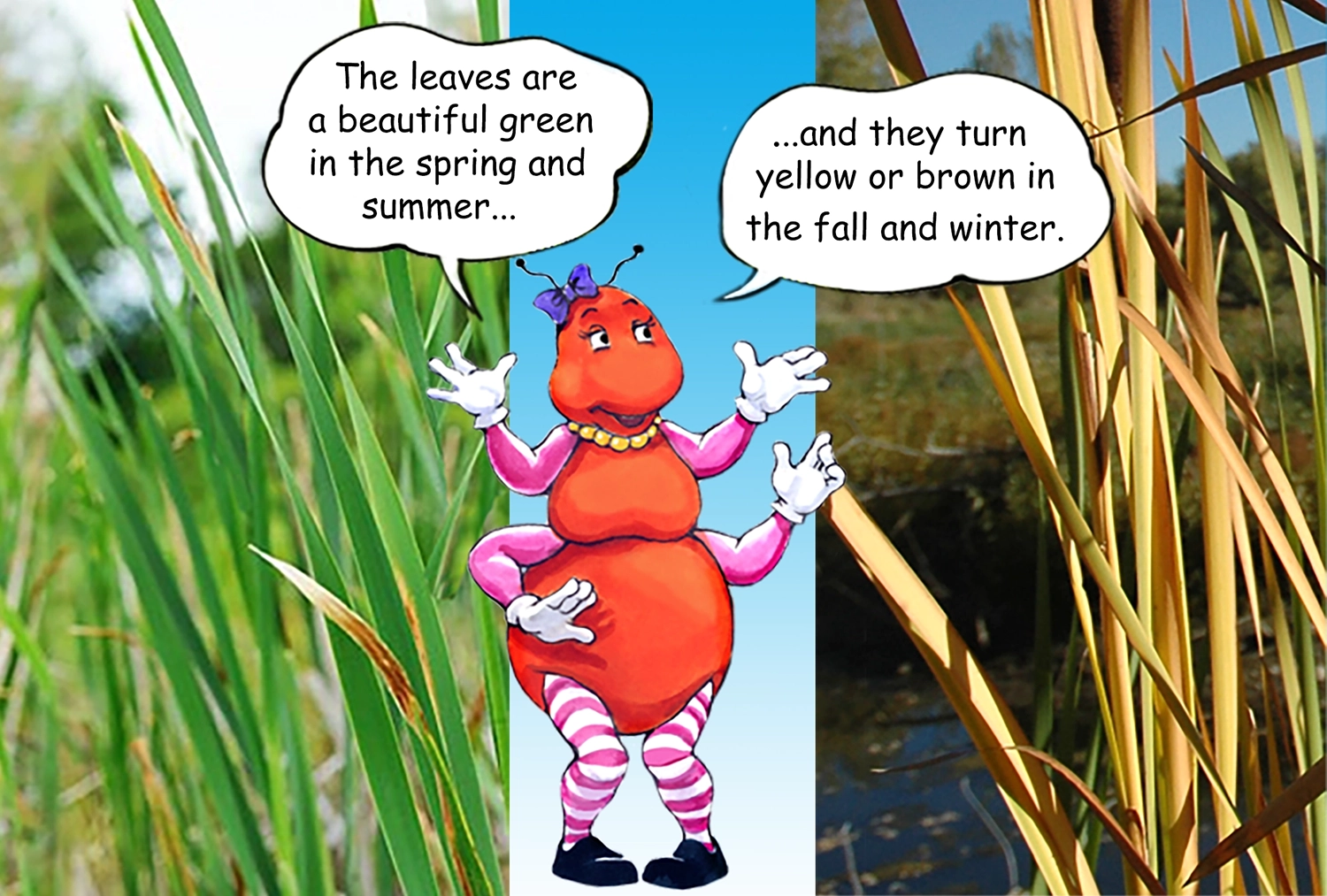
Let’s start with the Leaves.
The cattail leaves are long and flat and straight. The young shoots coming up in the spring are edible. They are delicious raw in a salad or as cooked veggies. “Cossack Asparagus”, is one of their nicknames.
Dried cattail leaves can be woven into baskets, mats and even seats for chairs. They’re really strong. Pulp from the leaves can be used to make paper and string.
The Cattail has lots of uses, like filtering polluted water and being kind of a supermarket of Nature.

Check out the cattail flower!
There are two parts to the cattail flower, a female, and a male. The female flower below is bright green and smooth until it’s pollinated.
The male flower produces golden, yellow pollen. We gallavants love it! You might, too. The best time to harvest cattail pollen is right before summer solstice. You can take a paper bag and just bend the flower into it and shake off the pollen. It can be used for baking bread, muffins and pancakes. There are several recipes for these online.

When the female flower has been pollinated it changes into a thick, brown shape that looks like a hot dog or a cigar or, of course, a cat’s tail! Once the seeds are ready, it changes again becoming a big, fuzzy thing. It looks like cotton candy on a stick. Birds use it to line their nests. It can also be used as padding for mattresses and quilts. Life jackets filled with cattail down would keep you afloat if you fell overboard.
We gallavants use the cattail down to make Ganterville warm in the winter months.
It works great as insulation!
We gallavants use the cattail down to make Ganterville warm in the winter months.
It works great as insulation!

In the fall the wind helps to spread the seeds for new plants to grow.
But what keeps a cattail staying in one place? The root, of course!
The root of a cattail is called a ‘rhizome’. It looks like a long tube and grows sideways in the muddy ground. New shoots sprout from the base, and whole new plants can grow up right from the rhizome. This is another way for this plant to multiply.
The new shoots of these roots are just delicious! They can be peeled and eaten raw or cooked like potatoes. Cattail roots have more starch than potatoes and more protein than rice. Some plant, eh!
Join our Newsletter:
Hey kids and parents! Don’t miss out on the fun—join our Gallavants mailing list today! Be the first to know when we reveal the next Plant of the Month with more exciting facts, colorful adventures, and nature surprises. It’s a fun way to learn together and stay connected to the amazing world of plants. Sign up now and let the discoveries bloom!